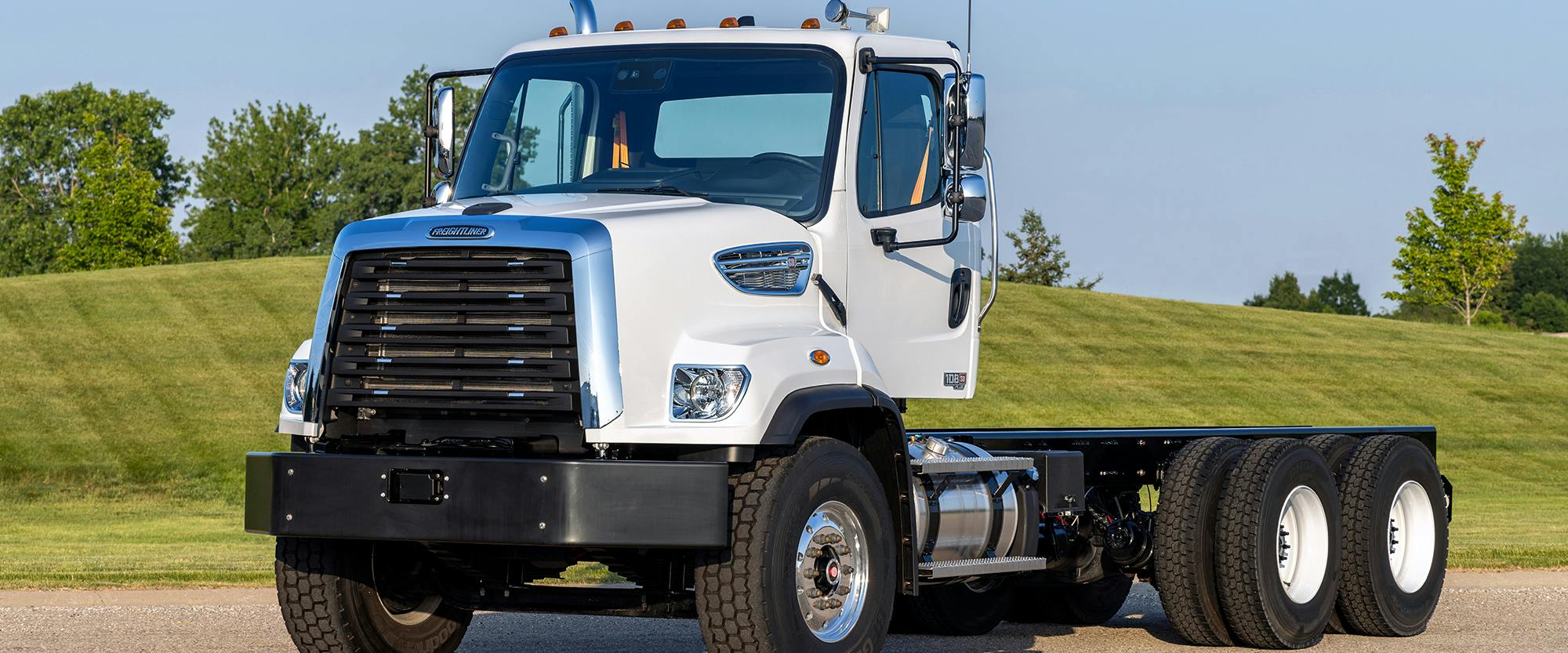
Construction & materials
Plan the full cycle from loading to site access, positioning and unloading. Bring the body dimensions, typical load and your most restrictive work locations into the discussion before selecting the chassis.
Freightliner / Class 7–8 / Construction & Municipal
Serious capability. Room to manoeuvre.
Model overview
Sales resources
Discuss specifications, body applications, availability, and ordering with our commercial truck team.
Manoeuvrability & a useful view
The 108SD Plus combines a 108-inch day-cab BBC, a published wheel cut of up to 50 degrees and a 2,500-square-inch windshield. Those figures are starting points for reviewing the finished truck.
A plow or specialized body changes the space the vehicle needs. Tell us where your current truck makes the job difficult so we can assess the complete layout with your body supplier.
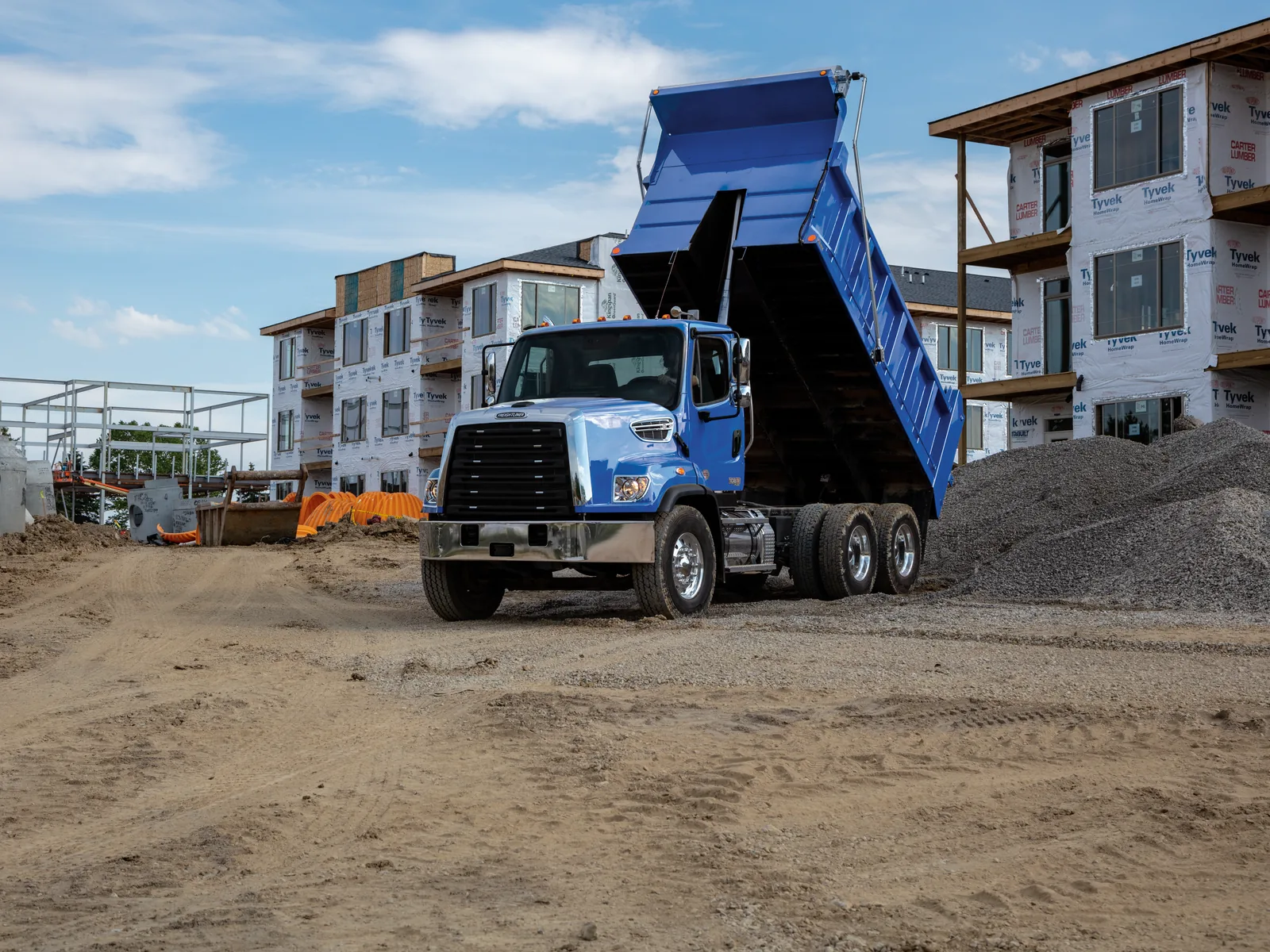
Five application starting points
Construction and municipal duties take different forms. The body supplier’s requirements help establish whether the 108SD Plus is the right starting point for your load, equipment and operating cycle.
Plan the full cycle from loading to site access, positioning and unloading. Bring the body dimensions, typical load and your most restrictive work locations into the discussion before selecting the chassis.
Define which crews will use the truck and whether its assignments change through the year. Identify permanent equipment, interchangeable bodies and the controls each role requires.
Review the plow, spreader, hydraulics, lighting and operator controls as a complete installation. Include equipment weight and position while working and travelling, plus the truck’s role outside winter.
Start with the sweeper supplier’s chassis requirements: working speed, equipment power, water storage, collection capacity and sightlines. Review access for emptying, cleaning and service as well as the sweeping route.
Bring the body drawing, mounting requirements, equipment drive and working weight. Review the available chassis space with the supplier so the completed vehicle suits the assignment and remains practical to maintain.
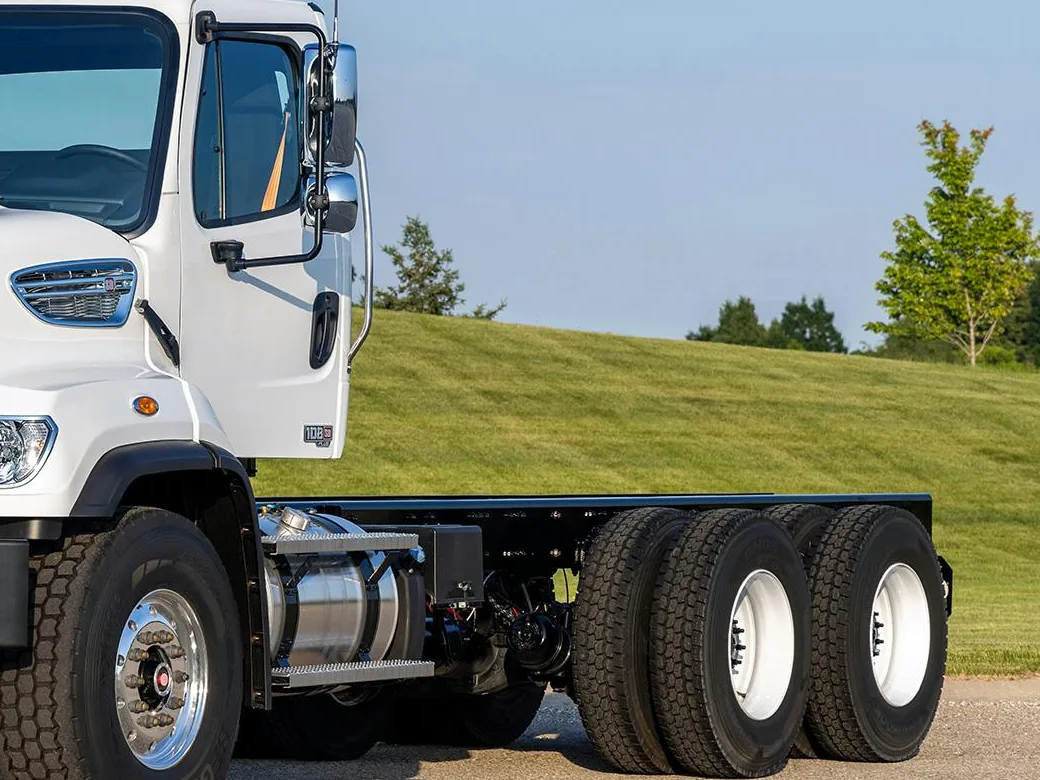
Chassis space & equipment packaging
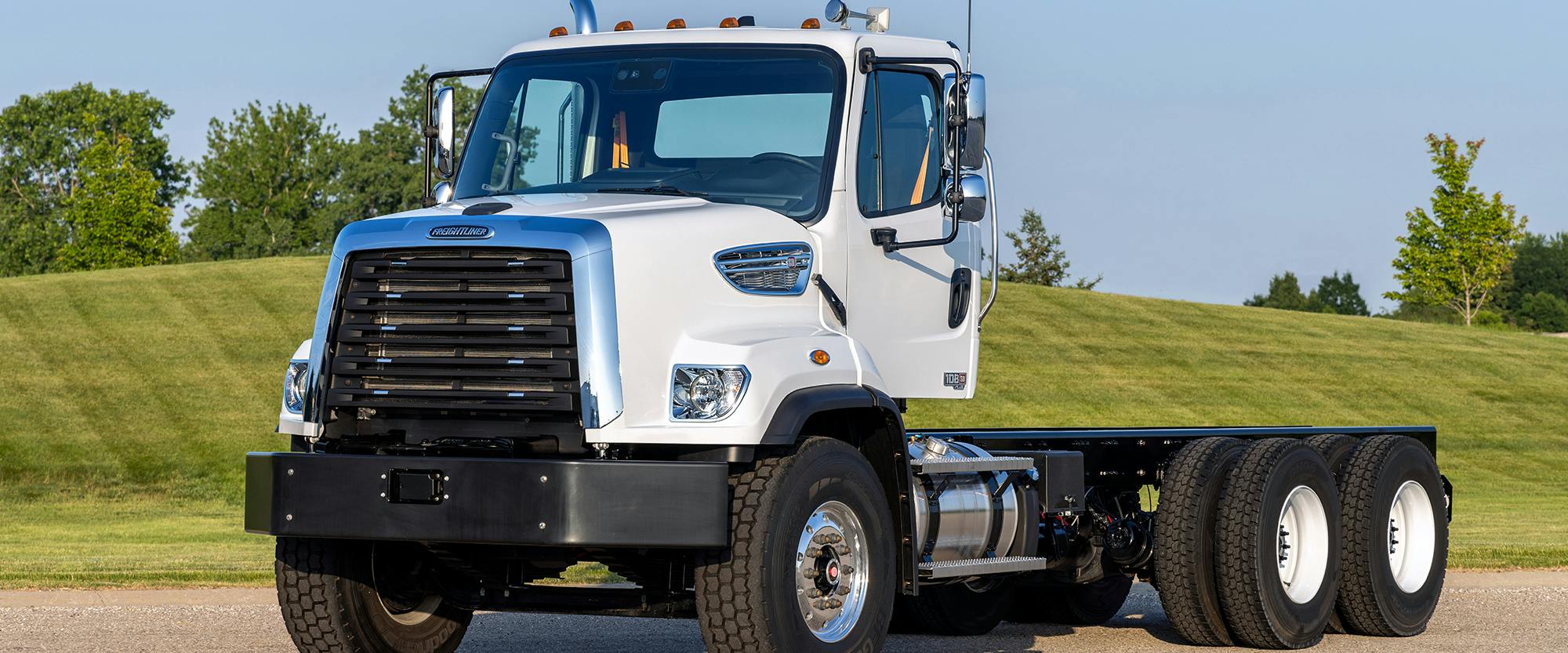
A clear back-of-cab area and available factory pre-punched frame rails support body installation. Plan that space around the equipment that will do the work.
Single and tandem rear-axle arrangements and all-wheel-drive front-axle options are listed for compatible builds. Our team can review the approved combination with your body supplier and Canadian operating requirements.
QuickFit, CHEC & PTO
Bring the equipment supplier’s power, operating-speed and duty-cycle requirements. Mechanical installation, electrical controls and operator training belong in the same build discussion.
The multiplexed electrical architecture supports compatible equipment connections, programmable switches and interlocks. Define which functions belong in the cab, which belong at the body and how the operator should use them.
The Daimler CHEC Tool supports eligible electrical parameters and body functions. Plan the control sequence and required conditions with the equipment manufacturer, then have the completed installation engineered and validated.
Front-engine, rear-engine and transmission PTO arrangements depend on the selected powertrain. Establish how long the equipment works, its power demand and whether it operates while parked, moving or both.
Three cab formats
BBC means bumper-to-back-of-cab, not the completed truck’s overall length or usable interior space. Confirm the actual seating, storage and body arrangement on the proposed build.
108-inch BBC
The shortest published cab offers a starting point for a daily operator workspace. Review who travels in the truck and the paperwork, devices and personal equipment that need to stay inside.
134-inch BBC
Additional length behind the front seating area gives you another accommodation option. Match the approved seating and storage layout to the team’s routine and the equipment carried aboard.
156-inch BBC
Discuss this format when moving the team is part of the assignment. Confirm approved seating, access and personal-equipment storage, then review the cab-and-body combination at the places the truck will work.
Plus-series controls & access
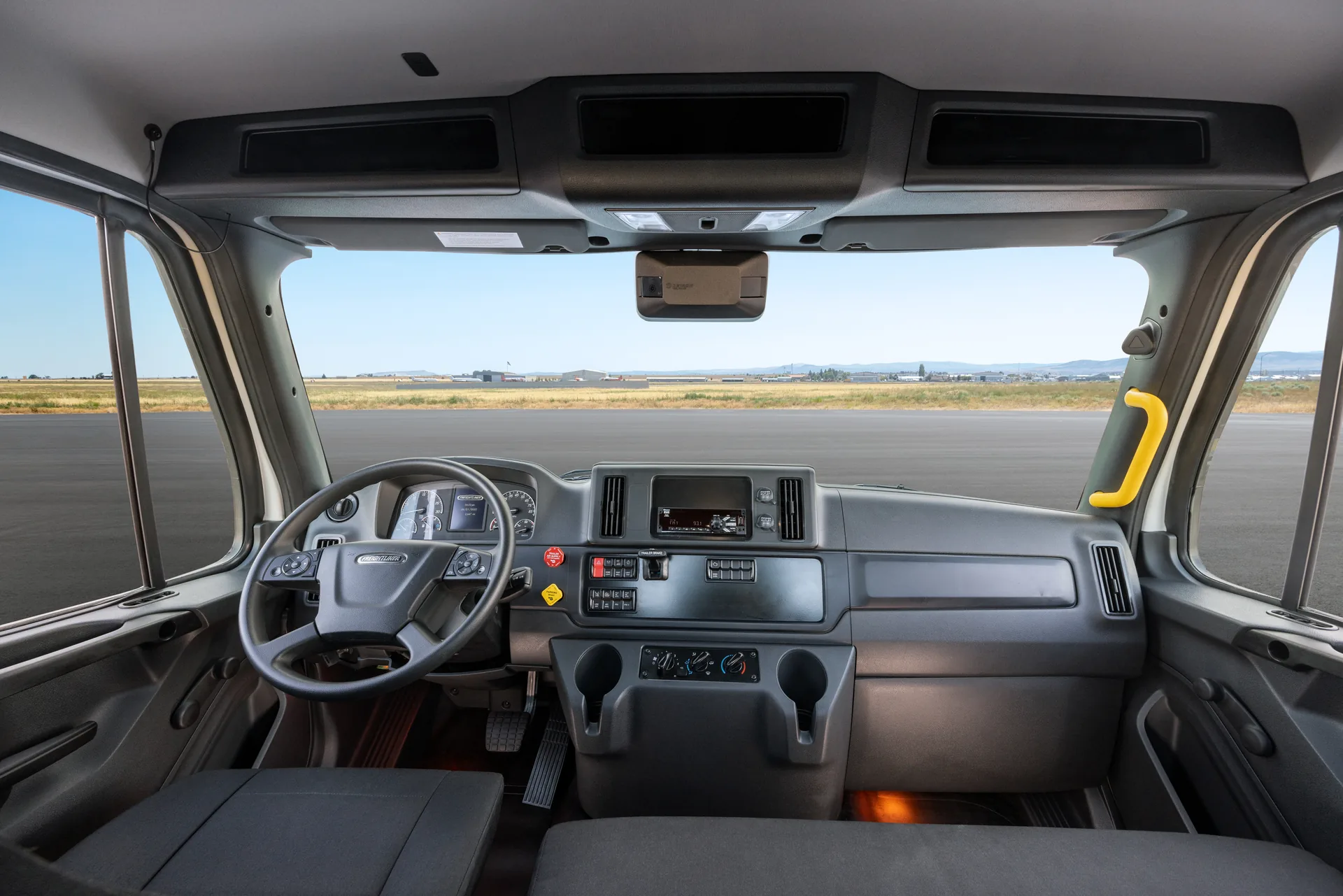
The Plus redesign brings an updated instrument display, steering-wheel controls, a configurable dashboard, seating adjustability and improved insulation. Plan equipment switches and device mounts with normal driving functions.
Confirm the selected trim and seating without assuming one package fits every operator. The finished body should leave cab access, fuel points and equipment controls practical to use.
Diesel engines & transmission pairings
Freightliner lists Detroit DD8, Cummins B6.7 diesel and Cummins L9 engines for the 108SD Plus. L9 availability is qualified by operating market. Our Sales team can confirm current Canadian ratings, emissions configuration and the engine, transmission and PTO combination for your application.
The 7.7-litre DD8 uses common-rail injection and variable cam phasing to support aftertreatment temperature during low-speed operation. Detroit identifies front- and rear-engine PTO capability for compatible vocational applications.
Describe the loaded route, stops, working speeds and time spent running auxiliary equipment. A vehicle that works many hours on site needs to be evaluated beyond annual road distance.
The engine’s aftertreatment technology can reduce the need for regeneration in suitable conditions; operating instructions and maintenance still apply. Confirm the current rating, pairing and compatible diagnostic services on the proposed Canadian build.
The B6.7 is a diesel platform used in medium-duty truck applications, with electronically managed engine systems and Cummins service resources. Confirm the rating and emissions configuration offered in your 108SD Plus.
If your fleet already uses this engine family, include service practices, operator familiarity and maintenance requirements in the evaluation. Then compare those factors with the actual loaded work and equipment demand.
Review the engine, transmission, axle ratio and PTO as a complete installation. Our team can help establish the Canadian combination appropriate to the vehicle you intend to put to work.
The Cummins L9 has replaceable cylinder liners and a variable-geometry turbocharger, with an engine design intended for demanding truck duty cycles. Road performance and equipment operation both belong in the evaluation.
Freightliner qualifies the L9 listing by domicile. Ask Sales to confirm the eligible Canadian operating market, current build timing and chassis rating before selecting it. The engine-family range does not establish the output of every 108SD Plus.
Provide the equipment manufacturer’s demands and loaded operating conditions so the proposed engine and transmission can be reviewed with the body specification.
The Allison 2000 Series is listed for compatible 108SD Plus configurations. Its product family includes close- and wide-ratio choices depending on the specific transmission model.
Torque-converter launch and automatic shifting are useful characteristics to discuss for repeated starts and low-speed positioning. There is no driver-operated clutch, but correct operation and the approved application remain important.
Review the engine rating, vehicle weight, equipment cycle and PTO requirements. The selected transmission’s limits must match the completed truck; listing an option does not mean it supports every model-wide maximum.
The 3000 Series is designed for a broad range of commercial applications, including construction, refuse and utility work. Freightliner lists it among the automatic choices for compatible 108SD Plus builds.
For equipment-focused work, describe how the truck launches, travels, positions and supports the body. Review torque-converter operation, gearing and PTO compatibility alongside the engine selection.
Our team can check the specific transmission model, approved Canadian pairing and application limits. Component-family ratings and variants need to be matched to the actual 108SD chassis and completed-vehicle requirements.
Freightliner lists Eaton Fuller 9-, 10- and 11-speed manual choices for the 108SD Plus. The orderable unit depends on the proposed powertrain and application.
Bring driver preferences, repeated starts, loaded grades and working speeds into the selection. Gearing should be considered with the engine rating, axle ratio, tires and operating load.
Where the body requires powered equipment, confirm the PTO arrangement and engagement requirements with the transmission and body supplier before finalizing the build.
Driver assistance & site awareness
Detroit Assurance with ABA 5 is offered on supported Detroit- and Cummins-powered configurations. Confirm the installed package and its operating limits. These systems support an attentive driver; they do not make the truck autonomous.
Review the finished vehicle
Published model figures describe a range of configurations. GVWR is rated total vehicle weight, not cargo allowance, towing capacity or gross combination weight. Confirm the Canadian build and completed-body requirements with Sales and your equipment supplier.
Freightliner publishes Class 7–8, 220–380 horsepower, 520–1,250 lb-ft of torque and up to 69,000 lb GVWR for the 108SD Plus. A particular truck’s rating depends on its approved engine, transmission, chassis, axles and body.
GVWR concerns the loaded vehicle as a whole. Establish usable payload from the finished truck’s weight, including the chassis, body, equipment, occupants and other operating items.
Review the completed specification and applicable operating requirements for the intended load. Maximum figures in different component listings cannot be combined into an approved truck rating on their own.
A clear back-of-cab area and available factory pre-punched frame rails support body installation. Plan body length, mounting locations, fuel-system placement, auxiliary components and access together.
Freightliner lists single and tandem rear-axle arrangements, several suspension families and all-wheel-drive front-axle options. Availability depends on the complete engine, cab, chassis and application.
Describe paved travel, unfinished surfaces and working-site demands. Review loaded axle distribution and body position with the equipment supplier so the selected configuration supports the actual assignment.
QuickFit provides a multiplexed electrical architecture, equipment connection points, programmable switches and configurable interlocks. The Daimler CHEC Tool supports eligible electrical configuration and parameter changes.
Define the operating sequence: which functions belong in the cab, which belong at the equipment and which conditions must be satisfied before an action operates. Plan how controls will be identified and how different operators will use them.
For similar fleet trucks, discuss consistent control and device layouts from the outset. The body supplier must still engineer the installation, validate the required logic and provide the appropriate operating instructions.
Front-engine, rear-engine and transmission PTO arrangements are included in the model’s published equipment categories. The compatible arrangement depends on the selected engine, transmission and body.
Bring the equipment supplier’s power requirement, operating speed and expected working duration. Identify whether it operates while parked, while moving or in both situations.
Review engagement conditions, controls, routing, mounting and service access as one installation. Equipment operation may account for much of the truck’s working day, so it deserves the same attention as road performance when the powertrain is selected.
Published BBC dimensions are 108 inches for day cab, 134 inches for extended cab and 156 inches for crew cab. BBC means bumper-to-back-of-cab, not overall vehicle length or interior usable space. Confirm the offered seating and storage with the selected body arrangement.
The Plus update includes an instrument display, steering-wheel controls, configurable dashboard, seating adjustability and cab insulation. Professional, Elite and Rugged trim names are listed; review the actual package and seating rather than assuming a universal default.
Wide doors, low step-in access and LED step lighting support repeated entry. Check the finished access path with normal footwear and protective equipment, including access to fuel points and body controls.
The 108-inch day cab and published wheel cut of up to 50 degrees give the manoeuvrability discussion a starting point. Actual space requirements also depend on wheelbase, overhang, the body and front-mounted equipment.
A 2,500-square-inch windshield provides a broad forward viewing area. Review mirrors, mounted equipment and devices from the operator’s working position after the body layout is defined. Camera views complement that planning and normal procedures.
The 108SD Plus specification lists halogen composite headlights. LED cab and step lighting are separate features. Confirm the lighting fitted to the proposed vehicle.
The 108SD Plus is offered with Detroit Assurance with ABA 5 on supported Detroit- and Cummins-powered configurations. ABA 5 can warn and apply partial or full braking in supported potential-collision situations involving vehicles ahead or moving pedestrians.
Adaptive Cruise Control adjusts cruising speed to help maintain a selected following distance. Confirm the operating range for the installed powertrain and system; low-speed capability varies with the configuration.
Lane Departure Warning provides alerts rather than automatic steering correction. Passenger-side Side Guard Assist warns about detected objects or pedestrians. Drivers remain responsible for observation and vehicle control and must follow the installed systems’ operating instructions.
Freightliner announced standard backup cameras for its vocational and medium-duty trucks in 2026. Confirm the camera installation or body-builder preparation on the vehicle being quoted.
The available factory Backup Alert package combines a seven-inch touchscreen, rear camera and reverse proximity sensor. Camera arrangements include an end-of-frame installation or preparation for positioning with the body. Confirm the selected display, camera and sensor package.
The package provides a rearward view and proximity warnings, not automatic reverse braking. Review camera placement with the body manufacturer and use it alongside normal checks and site procedures.
Freightliner also lists Bendix IntelliPark electronic parking-brake equipment intended to help address unintended rollaway. Include the installed controls in driver familiarization and follow the instructions for securing the truck before leaving the cab or operating body equipment.
On compatible Detroit-powered trucks, Virtual Technician provides supported fault information and helps explain its significance. The Detroit Connect Portal supports review of vehicle information and fault trends.
For compatible Detroit Assurance-equipped vehicles and services, Safety Event Viewer provides information about selected safety-system events for event review and driver coaching.
Decide who receives alerts and how they reach the person responsible for the vehicle. Confirm hardware, engine compatibility, included services, term and subscription costs. Use the information to support maintenance decisions while following vehicle warnings and arranging the appropriate diagnosis.
The cab combines aluminium construction with steel reinforcement, welded and riveted assembly, and e-coat corrosion protection. Standard TufWrap chassis-harness protection adds protection around the wiring. Carry the same attention through body wiring, exposed equipment and cleaning access.
A vocational truck may work many hours without covering many kilometres. Include equipment operation, engine hours, stops and working conditions in the service discussion.
Use the applicable driver and maintenance manuals for the chassis, engine, transmission and body. Plan routine inspections, cleaning and concern reporting together, including who will follow a fault through to repair. Corrosion protection and connected information complement ongoing care of the finished vehicle.
Three steps to a useful build discussion
A body-builder drawing, an existing truck specification or a description of what you need to change is enough to begin. Our team can help identify the details still to be confirmed.
Share construction or municipal duties, access restrictions, working loads and seasonal changes. Include time spent operating equipment as well as kilometres travelled.
Provide dimensions, mounting and equipment-power needs. Review approved seating, storage, controls and the access required for operation, cleaning and maintenance.
Review the engine, transmission, chassis and body together. Discuss quantity, replacement plans and desired timing so availability and the approved configuration can be checked.
Current inventory & ordering enquiries
Check available 108SD Plus trucks or contact Sales about incoming vehicles and ordering options. Compare the actual powertrain, axle arrangement, body preparation and equipment with your intended work.
Inventory is being updated.
Ask our sales team about available and incoming units.
Francis Canada Truck Centre
Keep the chassis and installed equipment information together. Our Sales, Parts and Service teams can help identify the right next step for your purchase or existing vehicle.
Bring the application, proposed body and operating requirements. We can help review chassis choices, compare available vehicles and identify the details needed for a quotation.
Buying & operating FAQs
Use these answers to prepare for a discussion with Sales, your equipment supplier and the operators who will work with the truck.
It is a Class 7–8 severe-duty platform positioned for construction and municipal work. The completed chassis, body and equipment are specified around the assignment, including where the truck travels and what it does on site.
Freightliner publishes a model range of 220–380 horsepower and 520–1,250 lb-ft of torque. The selected engine and rating must be confirmed for the Canadian build; those model-wide figures do not describe every truck.
No. The published maximum is up to 69,000 lb GVWR, a rating for the complete loaded vehicle. Establish usable payload from the approved truck and body configuration, including equipment, occupants and other operating weight. GVWR is separate from towing and gross-combination ratings.
Freightliner lists Detroit DD8, Cummins B6.7 diesel and Cummins L9 choices, with L9 availability qualified by operating market. Sales can confirm current Canadian ratings, emissions configuration, build timing and the approved engine/transmission pairing.
Yes. Allison 2000 and 3000 Series automatics are listed for compatible 108SD Plus configurations. The appropriate unit depends on the engine rating, working weight, duty cycle and PTO requirements. Eaton Fuller 9-, 10- and 11-speed manuals are also listed.
The published BBC dimensions are 108 inches for day cab, 134 inches for extended cab and 156 inches for crew cab. They provide different accommodation and packaging options. Confirm approved seating and storage with the body arrangement; BBC is not overall truck length or usable interior space.
Freightliner lists front-drive-axle options for the 108SD Plus. Ask Sales to confirm the approved all-wheel-drive combination for the required engine, cab, chassis, body and Canadian application.
Municipal work is a core application for the model. Bring the equipment supplier’s mounting, working-weight, hydraulic and control requirements so the completed vehicle can be reviewed. The body installation must suit the specific chassis and its approved configuration.
They support compatible body-equipment electrical connections, configurable controls and interlocks. Define the required operating sequence with the body supplier, then use the tools within the installation, engineering and validation process.
No. The available package provides a rear-camera view and proximity warnings rather than automatic reverse braking. Confirm the equipment and camera position on the completed body, and use it alongside driver checks and safe site procedures.
No. The 108SD Plus offers ABA 5-based assistance on supported configurations. Installed functions and operating limits vary, including ACC capability. Review the actual package and follow its instructions; lane and side warnings do not replace driver observation or vehicle control.
Begin with the completed vehicle your operation needs. The 108SD Plus has a shorter published day-cab BBC, while the 114SD Plus has different powertrain choices and higher published model maxima. Body requirements, site access and the duty cycle should guide the decision. Published ratings describe each model’s range; confirm the figures for the Canadian chassis and completed body you are considering.
Share the application, proposed body, approximate working load, crew requirements, equipment-power needs, quantity and desired timing. A body-builder drawing or existing truck specification is useful, but a clear description of the job is enough to start.
Walkaround
4 photos
Start with your assignment
Tell us where the truck needs to work, what it will carry and the equipment it must support. Our Sales Department can help turn those requirements into a complete 108SD Plus specification.