Commercial truck sales, parts and service specialists

Freightliner / Class 8 / Low-Entry Refuse

EconicSD

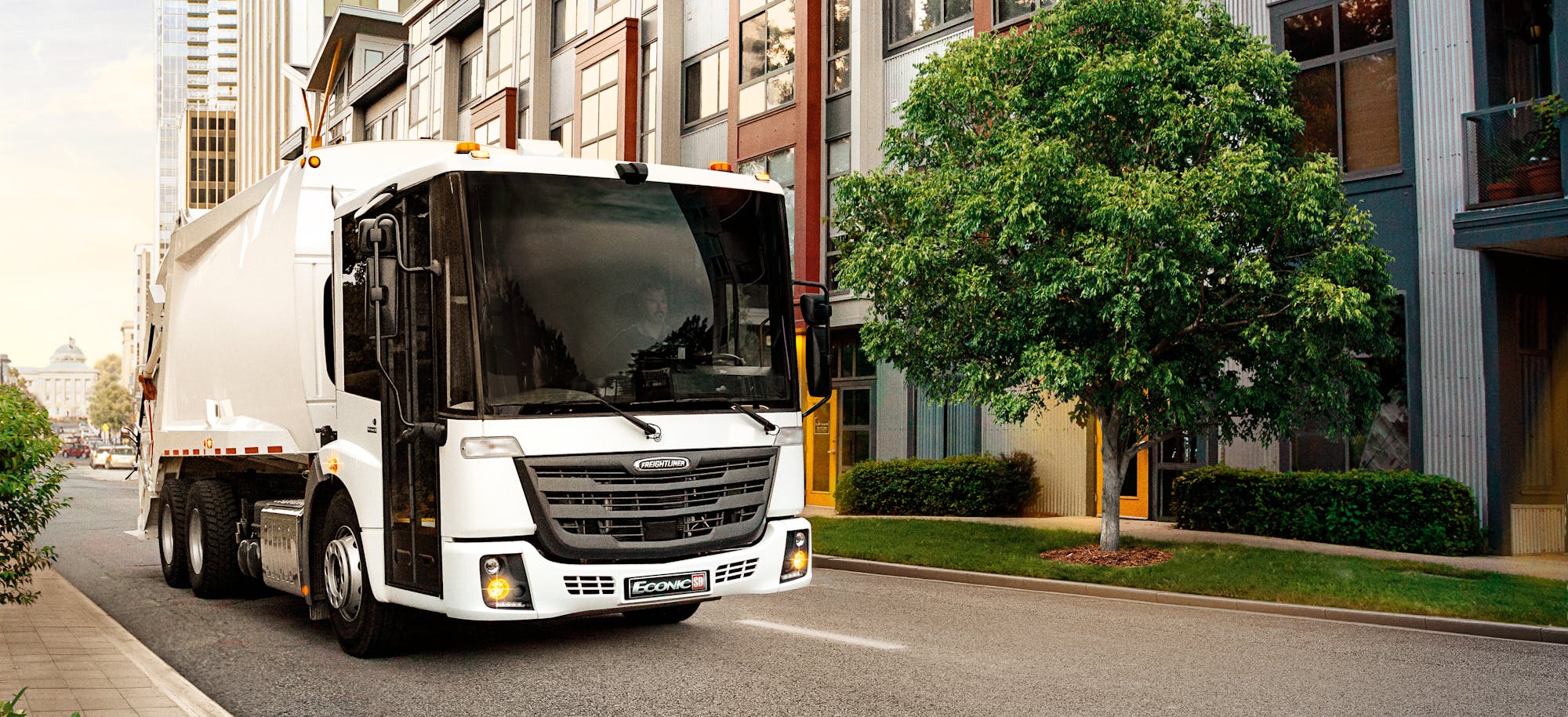
Built around the people behind every pickup.

Check truck availability
Application
Class 8 Low-Entry Refuse Truck
Horsepower
350 HP
Torque
1,050 lb-ft
GVWR
Up to 66,000 lb; by configuration

Model overview

Built around the people behind every pickup.

The Freightliner EconicSD puts the operator at the centre of refuse collection. Its Class 8 low-entry cabover design emphasizes cab access, visibility and the work performed at every stop. The published diesel powertrain pairs a 350 HP, 1,050 lb-ft Detroit DD8 with an Allison automatic transmission, with side-, rear- and front-loader configurations to assess around the route.

At Francis Canada Truck Centre in Ottawa, we help you begin with the complete collection operation: the body, the crew, the pickup routine and the support needed after delivery. Review the selected Canadian-market chassis and finished body together. The model’s published maximum of 66,000 lb GVWR is a vehicle rating, not a refuse payload figure or the rating of every build.

Sales resources

Build the right EconicSD

Discuss specifications, body applications, availability, and ordering with our commercial truck team.

Download model brochure (opens in a new tab)

Collection-body configurations

Match the truck to the way you collect.

Freightliner identifies automated side-loader, rear-loader and front-loader configurations. Begin with the waste stream, containers and pickup routine, then confirm the compatible chassis and body. Photos show application examples.

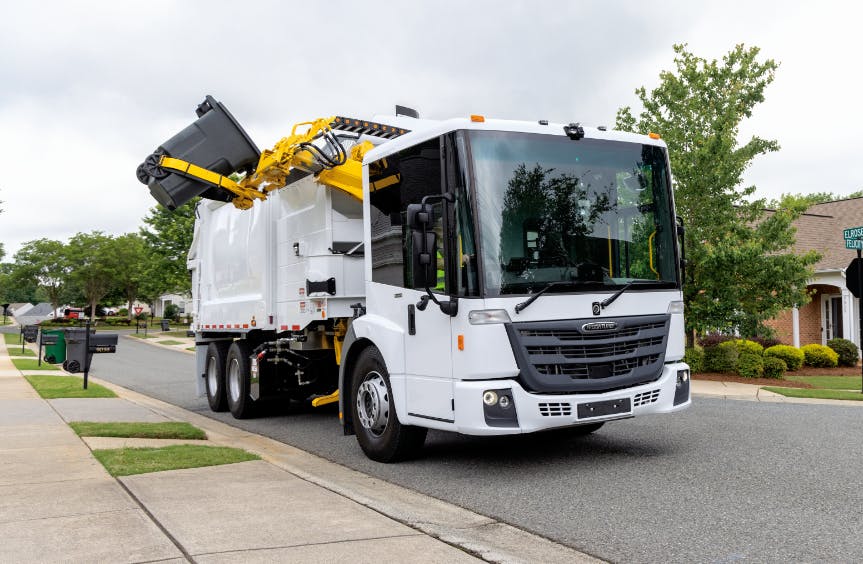
EconicSD side-loader application example collecting a cart.

Automated side loader

Review cart placement, the approach to each pickup and the space used by the equipment. Bring restricted streets and inconsistent cart locations into the discussion so the driver’s position, controls and collection-side view can be planned together.

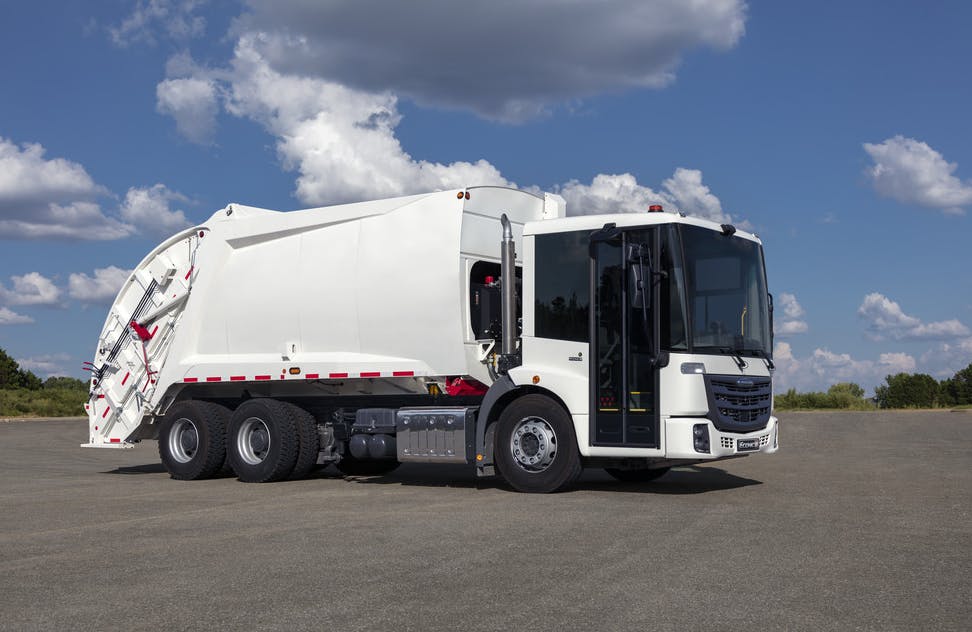
Freightliner EconicSD fitted with a rear-loader collection body, shown as an application example.

Rear loader

Start with the crew’s routine as well as the body capacity. Confirm approved seating, entry and exit, truck positioning and completed dimensions. Feedback from the people using the current vehicle can identify changes worth making in its replacement.

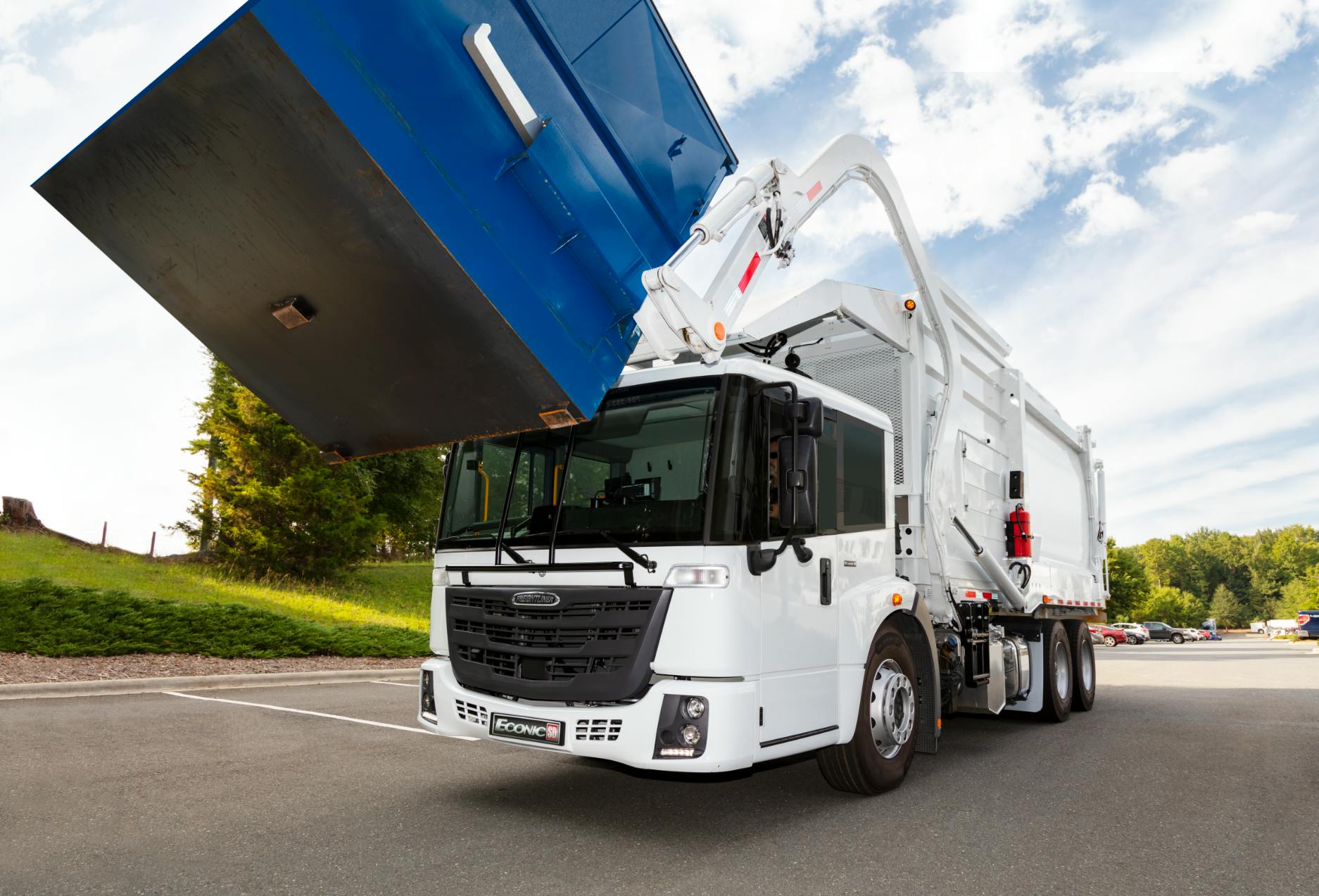
Low-cab EconicSD front-loader application example lifting a commercial container.

Front loader

Review container handling, lifting equipment, cab protection and clearance throughout the working cycle. Heil’s Half/Pack integration is one manufacturer example; confirm the actual body, supplier and completed vehicle for your operation.

Low entry & the collection routine

Make cab access part of the specification.

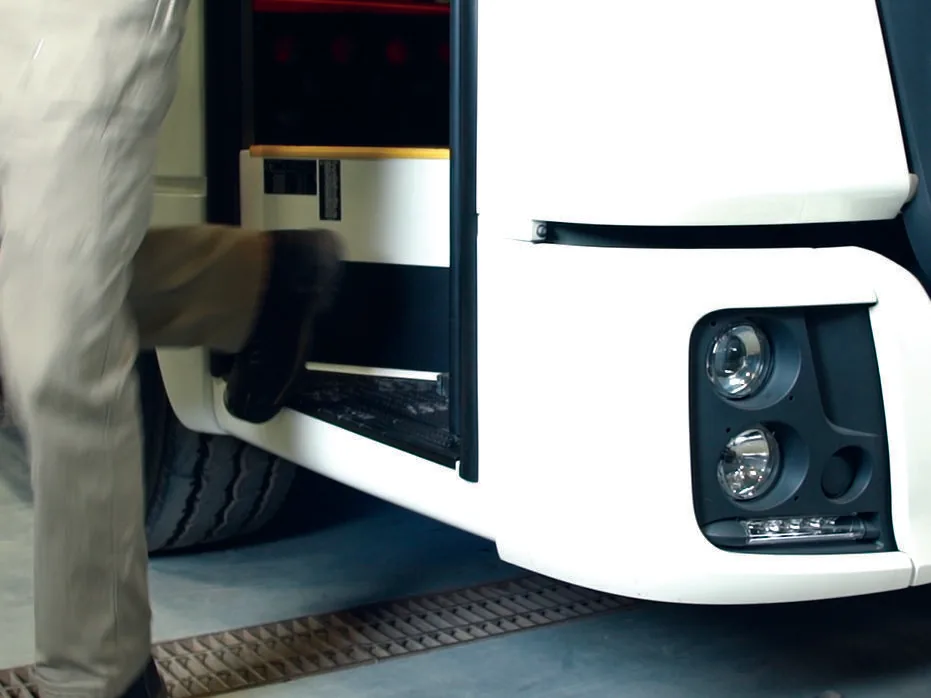
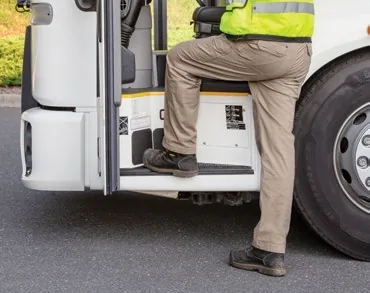
Freightliner’s published design describes an approximately 19-inch first step—about 48 cm—with a further step to the driver’s platform and through-cab access. Review the actual entrance, doors and ride height on the proposed vehicle.

For repeated entry, try the handholds and access path with normal footwear and winter clothing. Front-axle kneeling has been offered as an option; confirm it separately from the low-entry cab and follow the installed equipment’s operating instructions.

A worker demonstrates the low cab step beside the headlamps of a Freightliner EconicSD.
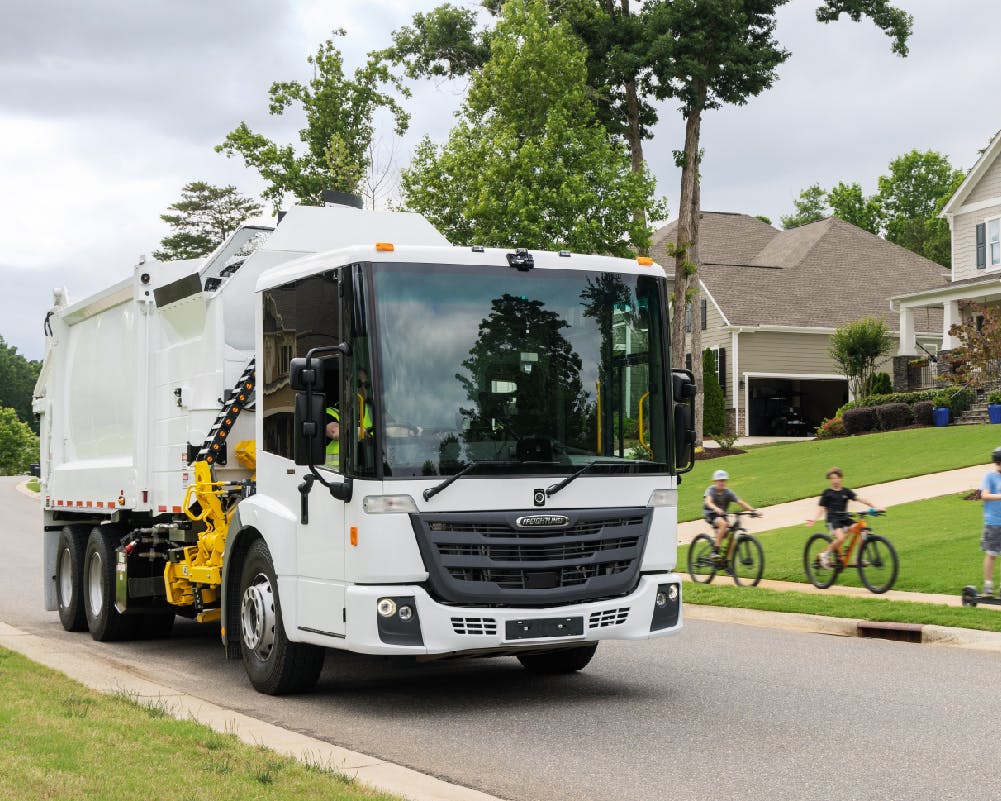
EconicSD cab in a residential setting with cyclists, illustrating the environment around a collection vehicle.

Cab visibility & the collection area

Look at the route from the operator’s position.

A panoramic windshield, lower seating position and expanded mirror coverage shape the EconicSD’s approach to visibility. Review the view toward a pickup, beside the truck and around the completed collection equipment.

A glazed pneumatic bi-fold passenger door and blind-spot cameras have been offered for the model. Check the selected doors and installed cameras rather than assuming every truck has the same arrangement. Windows, mirrors, cameras and direct observation each have a role before the truck or body moves.

Two published cab choices

Choose the roof around the body and crew.

Right-hand drive is a listed option. Confirm the Canadian build, approved seating, driving position and door arrangement early; a right-hand-drive option does not establish dual driving stations or a stand-up driving position.

High-roof cab

Review movement through the cab, the operator’s position and storage for the crew’s work items. Involve the people who will use the vehicle so approved seating and the interior arrangement fit the full shift.

Low-roof cab

Work with the body supplier on cab height, lifting equipment, protective structures and clearances. Confirm completed dimensions for both road travel and equipment operation; a lower roof alone is not a clearance guarantee.

Vehicle information & body controls

Give the operator a deliberately planned workspace.

An LCD information display and steering-wheel controls put vehicle information within reach. The suspended driver’s seat offers multi-axis adjustment, with heating described in Freightliner’s operator-focused material. Review the actual seating and equipment on the proposed build.

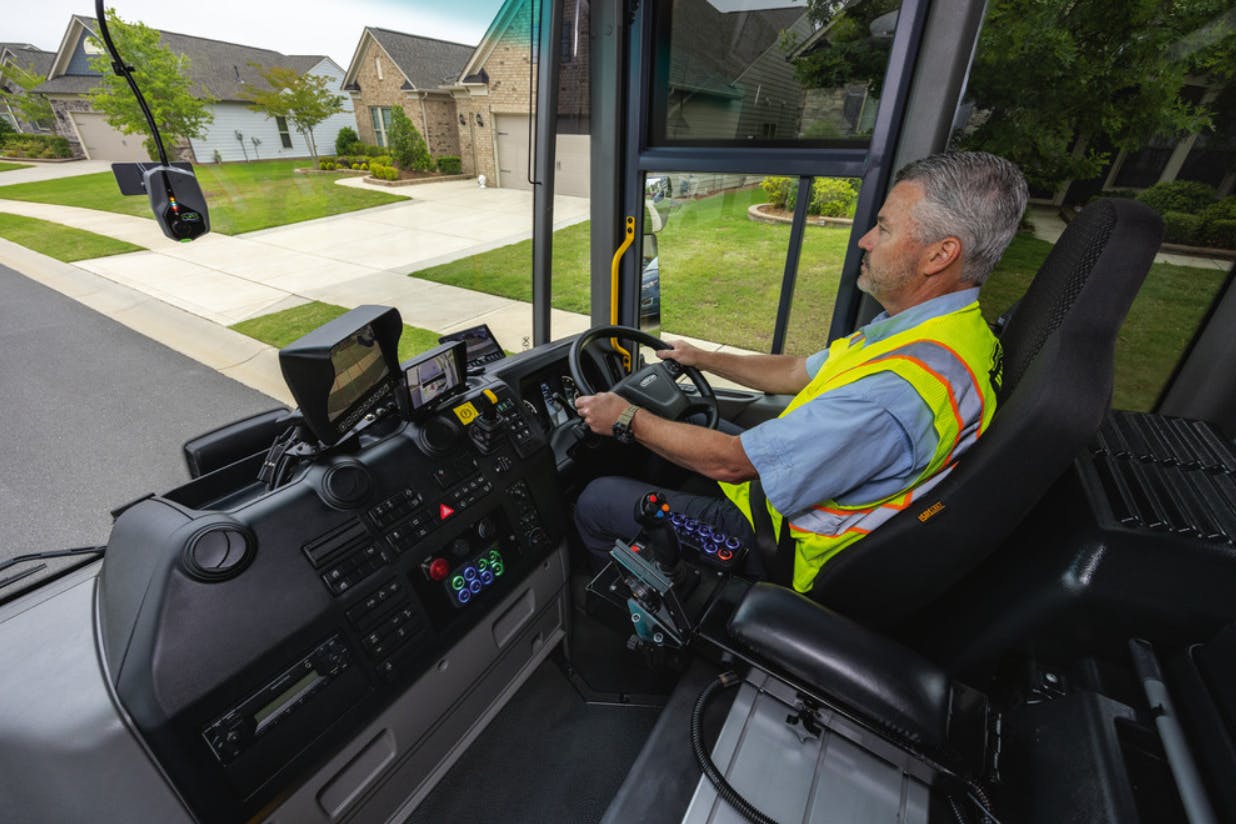
Plan the body controls, route device, radio and documents with the cab layout. Check what the driver needs to see before moving and what must remain within comfortable reach. The photo shows a right-hand-drive arrangement; confirm the configuration your operation requires.

Operator in an EconicSD right-hand-drive cab showing the actual interior and driving position; configuration example.

Detroit DD8 & Allison automatic

Power for the complete collection cycle.

Include travel to the route, repeated pickups, body operation and the loaded trip to unload. The engine, automatic transmission, axle gearing and equipment demand need to work together.

Detroit DD8 diesel

The published EconicSD rating is 350 HP and 1,050 lb-ft from a 7.7-litre diesel. Variable cam phasing supports exhaust temperature during low-speed work; aftertreatment care and regeneration instructions still apply.

Allison 3000 RDS

Freightliner specifies a six-speed automatic with PTO capability. Its torque-converter architecture supports the discussion of loaded starts, careful positioning and the transition between travelling and collecting.

Neutral at Stop

Allison’s March 2025 announcement includes EconicSD in DTNA’s standardization of FuelSense 2.0 Neutral at Stop. Confirm the fitted calibration and body interaction. It reduces transmission-related engine load; it does not shut the engine off.

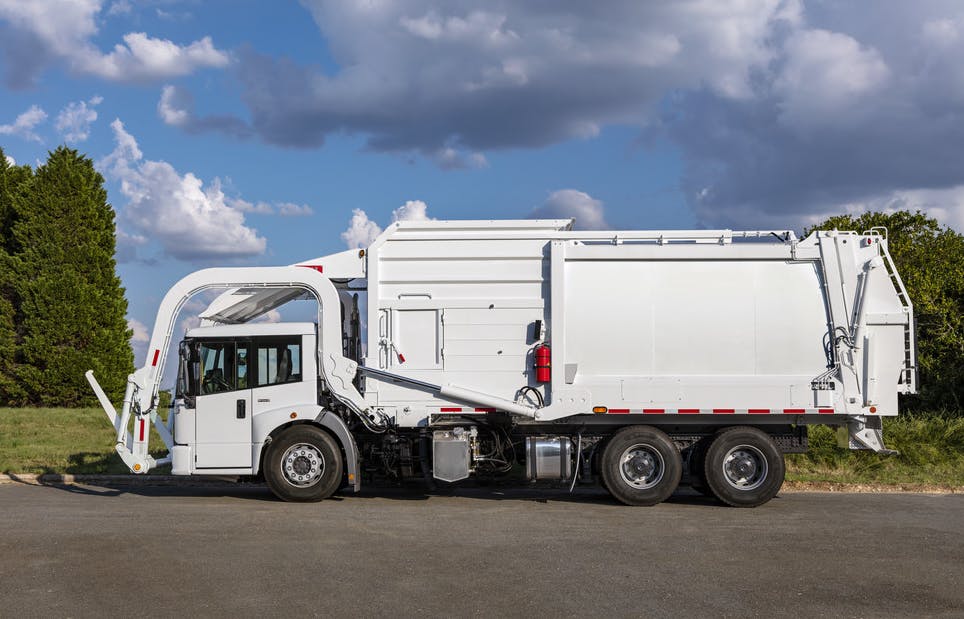
Side profile of an EconicSD with a complete front-loader body, shown as a body-integration example.

Collection equipment & integration

Make the body and chassis one working vehicle.

Begin with the loading method, body and operating sequence. Review mounting space, PTO and hydraulic demand, controls, lifting clearances and access for service with the equipment supplier. Use the EconicSD-specific engineering information for the selected chassis.

The cab also belongs in that plan. Preserve crew access when screens, switches and emergency controls are installed. Heil’s Half/Pack example shows how front-loader equipment can be integrated around the cab; the body and local supply arrangements must be confirmed for your truck.

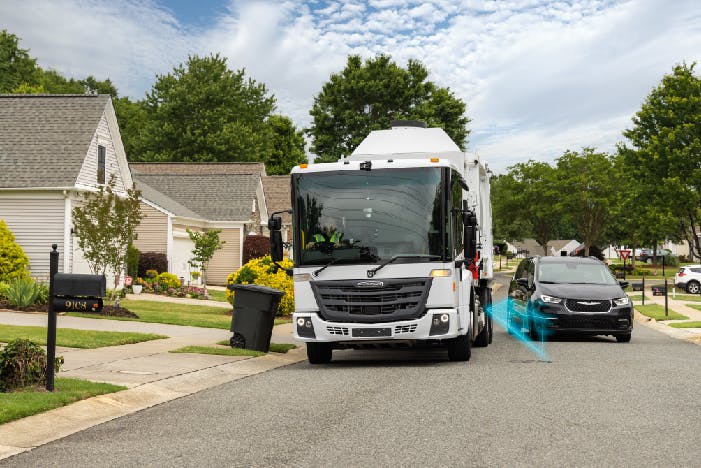
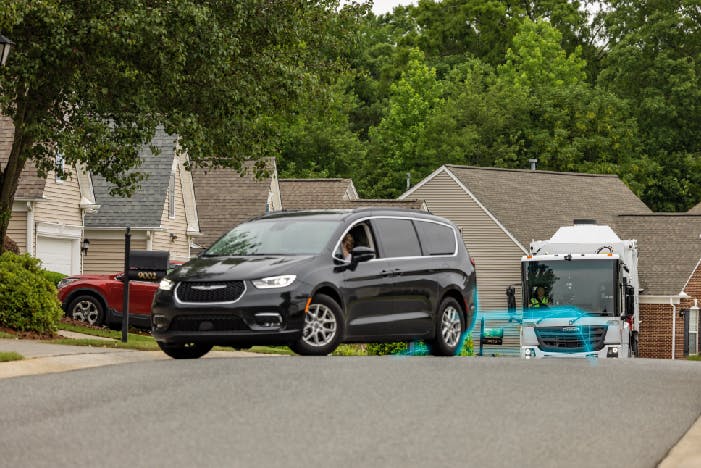
Detroit Assurance

Understand the assistance on the selected truck.

Freightliner lists Detroit Assurance for the EconicSD. Review the individual functions and operating limits on the proposed build, including Side Guard Assist availability. Driver assistance supports an attentive operator and does not replace observation or vehicle control.

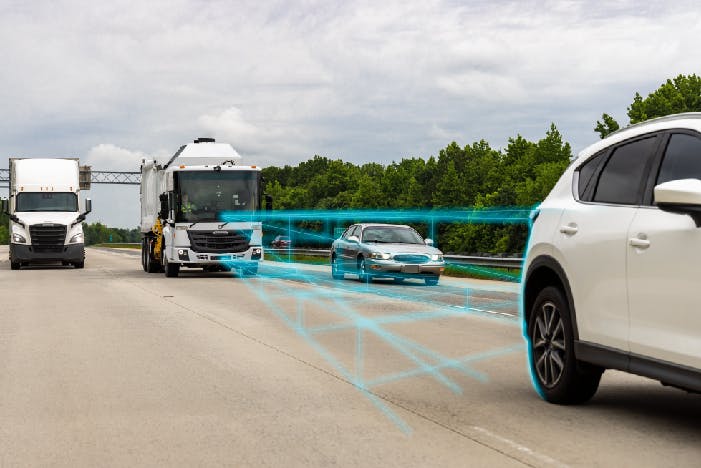
Forward traffic

Active Brake Assist can warn of a detected collision risk involving stationary or moving vehicles and apply partial or full braking in supported situations. Adaptive Cruise Control adjusts cruising speed in response to traffic ahead to help maintain following distance.

Review the fitted functions, indicators and operating limits during handover. Include how the collection body and other equipment may affect sensor views. The operator remains responsible for safe following distance and responding to the conditions.

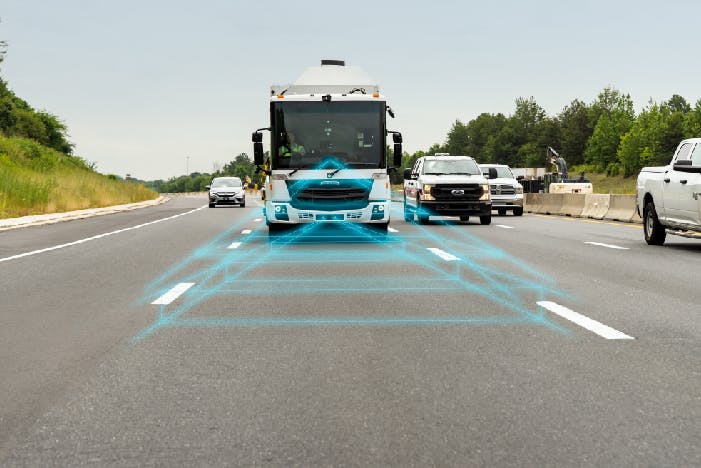
Lane awareness

Lane Departure Warning alerts the driver to an unintended lane departure. Confirm its operating conditions and indicators on the actual vehicle.

The function provides information to support the driver; it is not a promise of automatic lane keeping or an always-active guide while positioning beside collection equipment. Include the system in the practical vehicle introduction.

Passenger-side awareness

Side Guard Assist provides passenger-side object warnings. Confirm whether it is included in the selected Canadian build and understand the coverage of the fitted system.

Review mirrors, any cameras and direct sightlines with the body installed. The driver must check the collection area before moving or operating equipment. A warning system, camera view and automatic braking function have different capabilities; confirm what each installed device actually does.

Seasonal equipment & daily readiness

Plan for the whole Ottawa-area working year.

Early starts, winter clothing, cab heating and visibility belong in the original collection-truck discussion. Ask the crew which conditions are most demanding and review both the chassis and body requirements.

Review the selected chassis options

Published options include an engine block heater, auxiliary cab heater and protective chassis sealing. Confirm the actual equipment, access and maintenance needs of the build being quoted.

Include the collection equipment

Agree on body inspection, storage and cold-weather requirements with its supplier. Hydraulic systems and accessories need their own preparation; chassis options do not establish the suitability of every installed system.

Detroit Connect & fleet support

Give fault information a clear route to action.

Confirm vehicle compatibility, account setup, included functions and service terms. Decide who receives an alert, who contacts Service and who can change the truck’s assignment.

Virtual Technician

Supported fault-event and severity information can help the fleet decide what to do when a warning appears. Connect the diagnostic information with the operator’s description of the concern.

Portal fault trends

Review recurring faults alongside service history and crew reports. A regular fleet review can help identify what needs attention before the next route is assigned.

Safety Event Viewer

Freightliner identifies access for appropriately equipped EconicSD trucks. Confirm the supported event information and agree who will review it as part of the fleet’s operating process.

The chassis, cab and completed body

EconicSD specifications & working detail

The published 66,000-lb maximum GVWR is a total-vehicle rating, not payload or the rating of every cab and axle combination. Use the approved chassis/body drawings and Canadian build information for dimensions, loading and equipment decisions.

Cab & chassis

The EconicSD is a Class 8 low-entry refuse cabover. Freightliner’s model lineup publishes a maximum GVWR of 66,000 lb. The actual chassis, cab, axle and body configuration determines the proposed vehicle’s rating.

Include the body, equipment, fuel, occupants and intended refuse load in the finished-vehicle calculation. Check weight distribution through collection and unloading as well as the total.

Individual axle ratings cannot be added to establish an approved payload or operating weight. Ask for the appropriate completed-vehicle and axle review with the body quotation.

Freightliner’s published design describes an approximately 19-inch first step, about 48 cm, and a further step to the driver’s platform. Through-cab access is part of the layout. Actual access should be checked with the selected tires, ride height and door arrangement.

High- and low-roof cabs are listed. Right-hand drive is an option; confirm current Canadian availability, approved seating and the selected doors. Neither a roof name nor right-hand drive establishes a universal crew capacity, dual controls or stand-up driving.

Front-axle kneeling and a glazed pneumatic bi-fold passenger door have been offered as options. Review the specific installed equipment and its instructions, including the access path with normal footwear and work clothing.

The EconicSD uses a set-back front axle with up to 46 degrees of wheel cut. Review the wheelbase, body length, rear overhang and equipment position using a dimensioned drawing. A wheel-cut figure does not establish one turning circle for every completed vehicle.

The panoramic windshield, lower operator position and mirrors provide the basis for checking collection-side sightlines. Add the installed doors, cameras, body and other equipment to that review. Camera preparation is not the same as an installed viewing package.

Freightliner lists LED headlights as standard. Include lighting condition, mirror adjustment, camera views and the applicable driver-assistance indicators in the daily inspection routine.

Powertrain & equipment

The published EconicSD engine is the 7.7-litre Detroit DD8 diesel rated at 350 horsepower and 1,050 lb-ft of torque. Review the loaded route and body-power demand with the transmission and axle gearing.

Detroit’s variable cam-phasing technology helps maintain exhaust temperature during low-speed operation, supporting aftertreatment performance and reducing the need for parked regeneration. The engine still has emissions equipment and may require regeneration.

Introduce the warning indicators, operating instructions and appropriate service requirements during handover. Include equipment hours and stationary work in the description of the duty cycle.

Freightliner specifies an Allison 3000 RDS six-speed automatic with PTO capability. It uses a torque converter, rather than a dry-clutch automated-manual architecture. Confirm the compatible PTO, controls and equipment demands for the chosen body.

Allison’s March 18, 2025 announcement includes EconicSD in DTNA’s standardization of FuelSense 2.0 Neutral at Stop. The function reduces or removes transmission-related engine load while stopped. Confirm the installed calibration and how it works during collection-body operation.

Neutral at Stop is not engine shut-off and does not eliminate all stationary fuel use. Review the complete operating cycle rather than assuming a fixed fuel saving for every route or earlier inventory truck.

EconicSD development included work with refuse-body manufacturers, and DTNA provides model-specific equipment-manufacturer resources. Use the correct engineering information for the chassis being quoted.

Define the loading method, equipment sequence, mounting space, PTO and hydraulic requirements, controls, clearances and service access with the body supplier. Resolve these together rather than treating each as an independent option.

Include the operator’s workspace: switch locations, displays, emergency controls and the path through the cab. The completed installation needs its own engineering, commissioning and instructions.

Heil offers a Half/Pack front-loader integration with EconicSD for commercial and residential packages. Its published example includes Odyssey Controls, an articulating-arm arrangement and fold-away controls intended to preserve space for curbside cab exit.

Use those features to frame a discussion about body operation, cab protection and access. Review the finished body during road travel and throughout the lifting/collection cycle.

The named package is an example rather than equipment included on every chassis. Confirm the body model, installed options and completed dimensions, then discuss the supplier, local availability, service and warranty arrangements for the purchase.

Cab & chassis

The published front-axle rating is 18,000 lb, with a 20,000-lb option listed for the low-roof cab. The rear arrangement is a 46,000-lb tandem with hub reduction. Confirm the complete cab/axle configuration rather than combining component maxima into a vehicle rating.

Freightliner lists front and rear air suspension, with optional lifting and lowering functions, and standard all-wheel disc brakes. Review the suspension equipment with the body, access requirements and operating procedures.

Ride-height functions do not increase rated capacity or establish suitability for every surface. Where engine-brake equipment is fitted, follow its instructions alongside correct service-brake use and appropriate speed selection.

Ownership & crew readiness

Published EconicSD options include an engine block heater, auxiliary cab heater and protective chassis sealing. Discuss the actual package with Sales and Service when reviewing the truck.

Include early starts, cab heating, clothing, handholds and clear views of the collection area. Review cleaning, inspection and storage around the selected body and installed accessories.

Ask the equipment supplier for its hydraulic-system and cold-weather requirements. A useful year-round plan covers the finished working vehicle rather than relying on a general winter-ready description.

EconicSD has been offered with Detroit Connect Virtual Technician remote diagnostics. Supported event and severity information helps a fleet plan its response to a vehicle warning. The portal also provides fault information and trends, with Safety Event Viewer available for appropriately equipped vehicles.

Confirm the vehicle’s supported functions, account setup, service term and any subscription cost. Combine the information with driver reports and maintenance history.

Decide who contacts Service, who reviews repeated concerns and who may alter the assignment. Connected information supports the process; it does not replace the appropriate inspection or repair.

Detroit’s DD8 guidance distinguishes severe service using the actual duty cycle. Frequent short trips, substantial idling and demanding conditions matter, and schedules include calendar and engine-hour limits as well as distance.

Use the instructions for the exact engine, chassis, Allison transmission and collection body. A truck may spend much of its day operating equipment without travelling a highway truck’s distance; the longest engine interval is not automatically the right refuse schedule.

Agree which team handles each inspection or repair and keep the applicable records and instructions available. Ask the crew to report changes in operation, warning messages and equipment concerns through a consistent process.

Review the actual LCD display, steering-wheel controls, suspended seat adjustment and any fitted seat heating with the crew. Place route devices, body controls and work items so the common tasks and access path remain clear.

A replacement programme should coordinate chassis availability, body supply, commissioning and operator familiarization. Bring municipal procurement requirements or the private collection contract’s working needs into the same discussion.

Before the first route, confirm the fitted safety/camera equipment, body operating sequence, daily checks and support contacts. Chassis and collection-body maintenance and warranty concerns may need different support arrangements.

Plan your next collection truck

Bring us the route, body and crew requirements.

An existing truck specification, body proposal or outline of the replacement programme is enough to begin. You do not need a finished order sheet before talking to Sales.

  1. Describe the collection assignment

    Share the loading method, waste stream, containers and intended body. Include stop frequency, restricted locations and the loaded trip to the unloading facility.

  2. Define the crew and equipment

    Identify approved seating needs, driving-position preference, access, body controls and accessories. Bring the supplier’s mounting, hydraulic, weight and clearance requirements.

  3. Coordinate the purchase

    Discuss quantity, timing, procurement requirements and support expectations. Review chassis and body availability, commissioning and handover together before planning entry into service.

Collection-truck enquiries

Ask about EconicSD availability

Review any listed EconicSD vehicles or contact Sales about the body, cab and timing your operation requires. Confirm the actual chassis, equipment and completed-body specification with the proposed purchase.

Browse all Freightliner inventory

Inventory is being updated.

Ask our sales team about available and incoming units.

Francis Canada Truck Centre

EconicSD support in Ottawa

Keep the chassis, powertrain and collection-body information together. Our Sales, Parts and Service teams can help identify the next step, with specialized body work and supply arrangements confirmed for the actual vehicle.

Refuse-truck FAQs

Your EconicSD questions, answered.

These answers help prepare a discussion about the selected Canadian truck, body and collection routine.

Model & powertrain

It is a Class 8 low-entry cabover developed for North American refuse collection. Its design emphasizes operator access and visibility around the collection environment, with the completed body and crew arrangement selected for the assignment.

The model covered here uses the Detroit DD8 diesel. If your operation requires another fuel or electric propulsion, bring that requirement to Sales for a separate discussion. The specifications on this page describe the diesel EconicSD.

Freightliner identifies automated side-loader, rear-loader and front-loader configurations. Confirm compatibility with the body manufacturer for the proposed chassis. Capacity, equipment and completed dimensions vary by build.

The published combination is a 350 HP, 1,050 lb-ft Detroit DD8 diesel and Allison 3000 RDS six-speed automatic. Confirm the final equipment and any PTO requirements with the selected Canadian chassis and collection body.

Cab & crew

Freightliner’s published design describes an approximately 19-inch first step, about 48 cm, with a further step to the driver’s platform. Review actual access, doors and ride-height equipment on the proposed vehicle.

No. Front-axle kneeling has been described as optional. Confirm the lowering functions and suspension equipment fitted to the truck, and follow the installed system’s operating instructions.

Both appear in Freightliner’s published model information. Choose the roof with the body supplier so crew requirements, equipment clearances and the completed vehicle are considered together. Confirm approved seating and actual dimensions.

Right-hand drive is a listed option. Ask Sales to confirm current Canadian availability and the applicable door and cab arrangement. It should not be assumed to include dual driving positions or a stand-up driving station.

Equipment & operation

It is Freightliner’s published model maximum GVWR, not refuse payload. The body, equipment, fuel, occupants and load all contribute to the finished vehicle’s weight. A particular cab and axle configuration may have a different rating.

Freightliner identifies Detroit Assurance for the EconicSD. Confirm individual functions on the proposed build, including Side Guard Assist availability. The systems support an attentive driver and have operating limits; they do not replace observation or safe procedures.

Confirm what the installed truck and body equipment actually provide. A camera display, warning system and automatic braking function are different capabilities. A camera image alone does not establish automatic reverse braking, and the operator must understand the fitted equipment.

Ownership & your enquiry

Use the actual duty cycle and the applicable engine, chassis, transmission and body instructions. Detroit’s DD8 severe-service guidance includes distance, engine-hour and calendar limits. Refuse work should not automatically use the longest advertised highway interval.

Include the loading method, intended body, route description, expected crew, preferred driving position, quantity and timing. A current specification or body quotation helps. Sales can begin reviewing the appropriate configuration and availability before every detail is finalized.

Start with the complete working assignment

Put a different perspective on your next collection route.

Bring us the route, the body requirements and the challenges you want the next truck to address. Our Sales Department can help you begin an EconicSD specification around the people and equipment doing the work.

Call Truck Sales