
Heavy haul & equipment transport
Bring the tractor, trailer and representative loads into one discussion. Review loaded starts, terrain, connections and positioning at the destination; the model name alone is not a towing rating.
Western Star / Class 8 / Vocational & Heavy Haul
Built for the heavy work ahead.
Model overview
Sales resources
Discuss specifications, body applications, availability, and ordering with our commercial truck team.
Put the 49X to work
Begin with the loads you move regularly, the sites that challenge your current trucks and the equipment you cannot do without. The useful specification reflects the whole working week.
Bring the tractor, trailer and representative loads into one discussion. Review loaded starts, terrain, connections and positioning at the destination; the model name alone is not a towing rating.
Consider the route from the loading area to the receiving site, including unpaved access, trailer arrangement and equipment carried on board. Include the operator’s time away and access for inspections.
Plan loading, travel, site entry, positioning and discharge around the body and material. Eligible vocational transmission functions can support paving work; confirm the modes and equipment required.
Begin with the equipment supplier’s mounting, weight-distribution and power requirements. A mixer and a concrete pumper need different chassis discussions; twin-steer arrangements are among the published application choices.
Use the supplier’s drawings to plan mounting, deck space, storage, controls and service access. The selected crane and engineered installation establish lifting capability, rather than a universal 49X figure.
Describe the work at the destination as well as the journey. Equipment transport, specialized bodies and stationary power demand can lead to different engine, cooling and driveline choices.
Bring the full year’s assignments together: winter attachments, material hauling and infrastructure support. Review factory PTO options, controls, storage and access with the equipment supplier.
Chassis planning
The 49X offers single-channel and reinforced frame choices, with drive-axle, suspension and specialized arrangements selected around the assignment. Review the loaded vehicle and the equipment supplier’s mounting requirements together.
Straight frame sections behind the cab help organize the body installation. Plan tanks, batteries, storage, hydraulics and service access before the chassis and body orders are finalized independently.
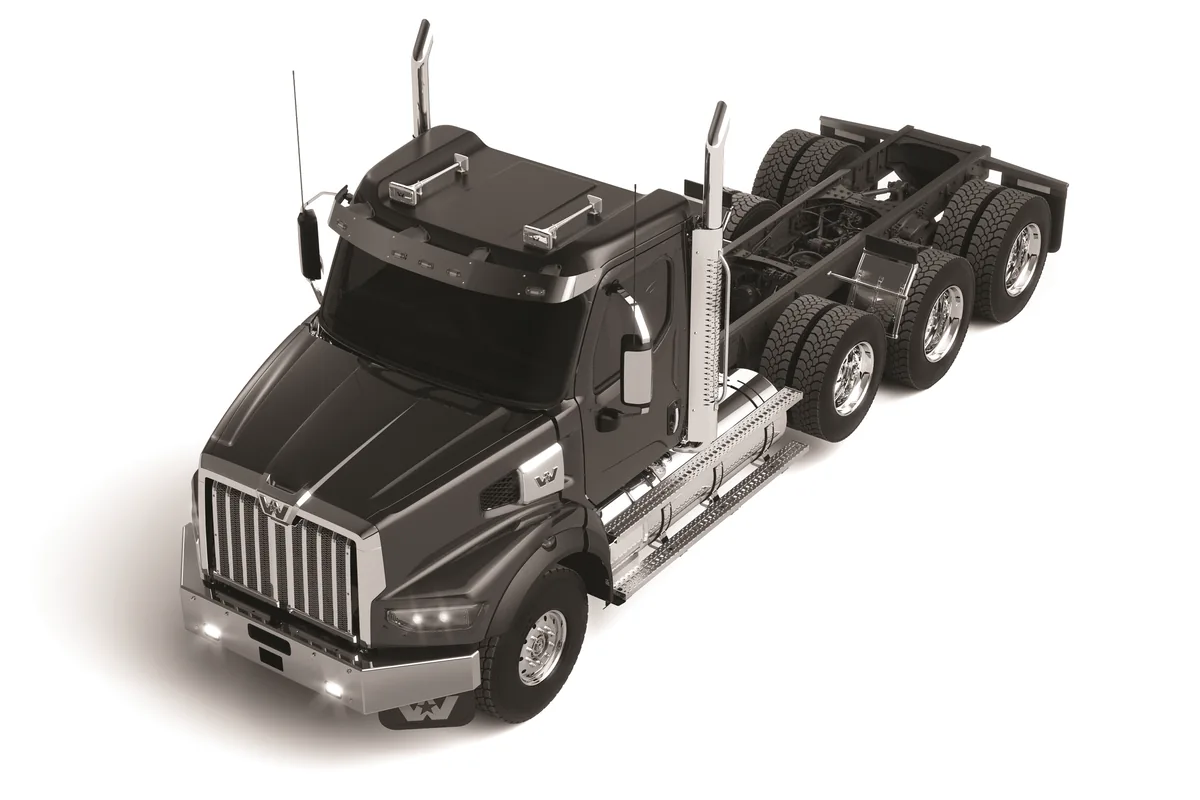
Hood & cooling choices
Compare the hood with the load, engine, cooling needs and axle arrangement. Power Hood is optional on eligible set-forward builds; its appearance does not independently increase engine output or pulling capacity.
Western Star’s lineup comparison lists a 1,400-square-inch radiator for the standard 49X. Assess the sloped hood, cooling package and view from the driver’s seat with the actual engine and equipment configuration.
The published Power Hood comparison lists a 1,600-square-inch radiator and a long-and-tall hood profile. Eligible set-forward applications include DD15, DD16 and X15 combinations, subject to the selected Canadian build.
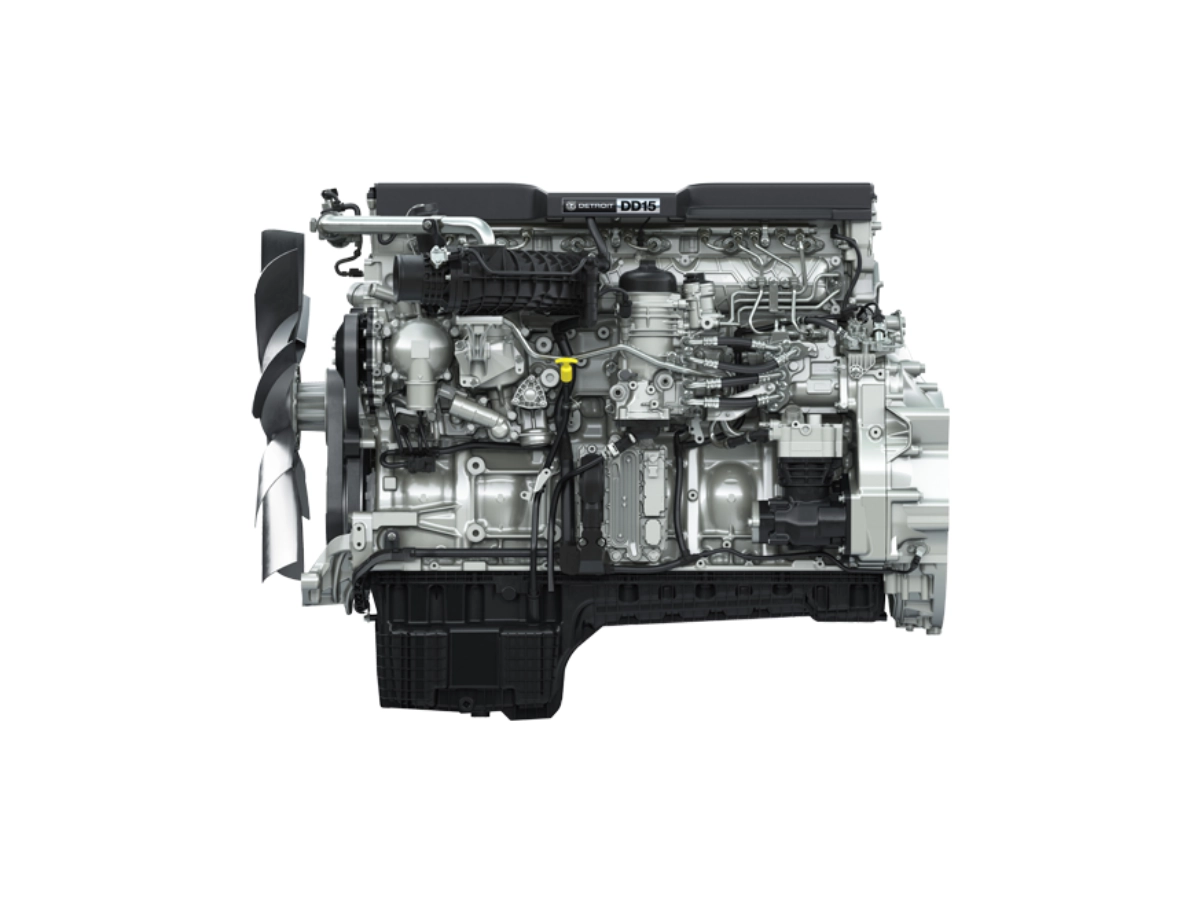
Diesel engines & vocational transmissions
Loaded starts, road travel, close positioning and equipment operation each deserve a place in the powertrain discussion. Western Star publishes Detroit DD13, DD15 and DD16 choices, together with Cummins X12 and X15.
Start with the work, then review the engine generation, rating, transmission and PTO arrangement. Canadian-market availability and approved pairings need to be confirmed for the truck being quoted.
Powertrain reference
The existing published engine references below remain separate from announced Gen 6 products. An engine-family rating is not confirmation that every combination is orderable in a Canadian 49X.
The existing 12.8-litre DD13 Gen 5 is published at 370–525 HP, with torque reaching 1,850 lb-ft. Its vocational features address low-load operation and aftertreatment temperature management, with front- and rear-engine PTO availability for eligible applications.
Describe the work at the site as well as the loaded road travel. Review the selected rating, transmission and equipment requirements together, especially when the truck will spend significant time operating a body.
Confirm the engine generation and Canadian build on the quotation. Thermal-management features do not eliminate emissions equipment, regeneration instructions or the duty-specific maintenance schedule.
The existing 14.8-litre DD15 Gen 5 reference is 425–505 HP, with torque reaching 1,850 lb-ft. Its published design includes a ball-bearing turbocharger and thermal-management features intended to support response and aftertreatment operation.
For mixed vocational and highway work, review the regular loads and distance between assignments. The engine discussion should cover the full working week rather than only an occasional maximum load.
Confirm the selected engine generation, rating, hood/cooling package and compatible driveline. These Gen 5 figures are separate from the announced Gen 6 programme.
Detroit’s existing 15.6-litre DD16 is published at 500–600 HP and up to 2,050 lb-ft. Its broad torque curve and integrated engine brake are part of its positioning for demanding loads and heavy-haul work.
Consider the engine with gearing, cooling, transmission, axle arrangement and trailer. High output does not establish the approved operating weight of the completed combination.
The existing DD16 maximum is 600 HP. The 49X’s 605-HP model reference comes from eligible Cummins X15 ratings, while the future Gen 6 DD16 has its own announced programme.
The 11.8-litre Cummins X12 is positioned for weight-sensitive heavy-duty applications. Published references include 350–500 HP, torque up to 1,700 lb-ft and an engine weight of approximately 2,050 lb.
Engine weight is one part of the finished vehicle. Compare the complete proposed truck, including the transmission, cooling, body and equipment, before drawing a payload conclusion.
Confirm the exact torque rating, Canadian availability and approved chassis/transmission combination. The engine-family range is a reference for the discussion, not a promise that every rating is offered in every build.
Western Star lists the 14.9-litre X15 at 400–605 HP, with torque up to 2,050 lb-ft. Cummins also offers Productivity Series ratings for demanding and mixed-use assignments; the broader model range is not a Productivity-only rating table.
Review the engine rating family with the loaded duty cycle, transmission, cooling and equipment demand. For a Power Hood proposal, confirm the eligible set-forward configuration and the complete engine/cooling combination.
The published maxima apply to eligible ratings. Establish the actual engine, emissions configuration and Canadian factory availability on the truck proposal or inventory record.
DTNA announced DD13 and DD15 Gen 6 ordering from September 1, 2026, with production planned to begin in January 2027. Gen 6 DD16 production is planned for 2028.
Keep those future programmes separate from the existing engine references above. For a new factory proposal, confirm the generation, rating, compatible chassis, Canadian availability and body-completion timing with Sales.
An ordering announcement does not identify the engine in a truck currently listed for sale or establish a delivery date for a finished vehicle. Use the individual truck’s specification and VIN when evaluating available inventory.
The 12-speed DT12-V uses automated clutch engagement and shifting for vocational work, with rear and bottom PTO possibilities on eligible installations. Select it around repeated loaded starts, positioning and the transition between the road and worksite.
Review the fitted programming, operating modes and equipment controls with the people who drive the truck. Confirm the exact engine pairing, transmission rating, combination weight and application approval on the proposed build.
A transmission-family capability is not a finished truck’s payload or towing rating. Establish the full tractor, trailer or body combination before using any component rating in the purchase plan.
DT12-VX is the extreme-vocational member of the Detroit range, with reinforced internals and positioning for demanding applications such as logging, mining and oilfield work. It is a 12-speed automated-manual choice within the published 49X range.
Begin with why the assignment requires it: loaded conditions, terrain, equipment operation and the complete driveline. Review the approved engine pairing, PTO provisions and operating modes with the final chassis specification.
Its component ratings do not independently establish a 49X’s permitted payload, towing capability or gross combination weight. Confirm application approval for the complete vehicle and intended work.
The published 49X list includes Allison 4000, 4500 and 4700 automatics, Eaton Fuller manuals and Eaton Endurant automated manuals. The actual engine, application and equipment requirements determine which pairings can be considered.
Discuss loaded starts, close positioning, PTO demand, operator preference and consistency with the existing fleet. Driver and maintenance-team experience can help identify useful features to retain when replacing a truck.
Review the exact transmission model, rating and controls on the proposal. Listed families are alternatives, not confirmation that every engine can be combined with every transmission.
Equipment connections & controls
Describe what needs power, when it operates and how the operator controls it. Plan the equipment connections and service access alongside the chassis layout.
Eligible front-engine, rear-engine and transmission-mounted arrangements serve different needs. Bring the supplier’s speed, power, mounting and stationary/moving-operation requirements before choosing the installation.
Dedicated electrical interfaces and configurable controls support the body’s functions. Use supported CHEC inputs, outputs and logic to plan a consistent control sequence with qualified integration support.
Protected in-cab access can group body interfaces, power distribution and connections. Keep the electrical plan and approved changes documented for the operator, body builder and maintenance team.
Cab, visibility & driver controls
The steel-reinforced aluminium cab, steel doors and vocational mounting address the working environment. Wide door openings, grab handles and traction-oriented steps support access, while the windshield and heated C-Bar mirrors shape the view around the completed vehicle.
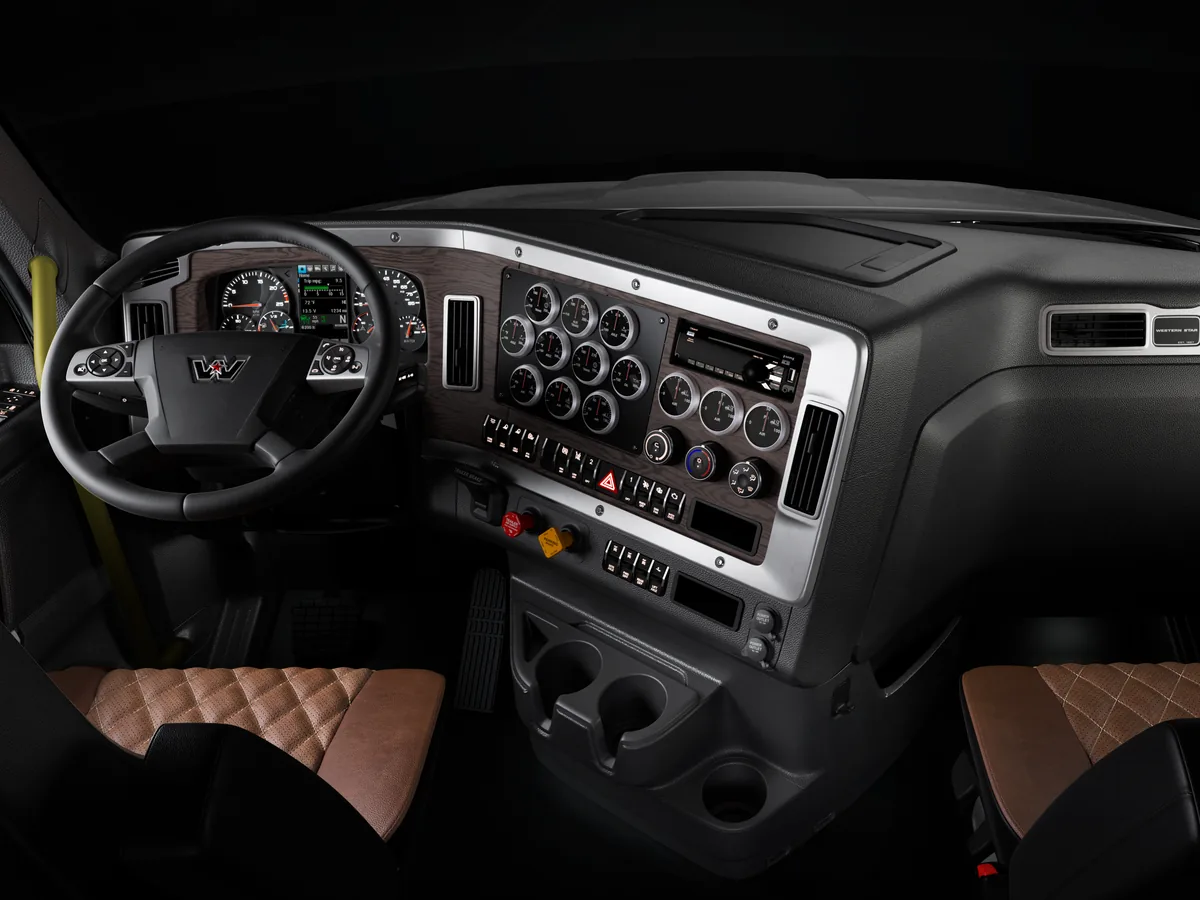
Inside, the Driver Command Center combines physical gauges and a central information display. A multifunction steering wheel, adjustable column and FlexPanel space let you plan body controls and work devices around the operator’s actual routine.
Cab & sleeper choices
Western Star’s explicit 49X cab listings include the choices below. Confirm the Canadian build, roof profile, floor plan and fitted equipment; sleeper length alone does not define the living space.
Start here when the truck returns to base after the shift. Review approved seating, paperwork, personal items and the work equipment that needs a place inside.
Consider compact sleeper accommodation with the tractor or body arrangement. Review the roof, additional cab length and equipment clearance together.
Compare the extra accommodation with the actual time spent away. Include clothing, work items and storage needs before settling on the floor plan.
For regular nights away, assess the sleeper as a space used through the whole trip. Review storage, preparation for rest and the installed convenience equipment.
Bring substantial sleeper space into the discussion when the assignment calls for it. Compare the exact accommodation with the completed vehicle layout and intended routes.
Detroit Assurance & driver support
Review the installed package and its operating limits. Driver assistance supports an attentive operator and does not replace observation, appropriate speed or control of the vehicle.
The 49X is offered with Detroit Assurance with ABA 5. DTNA’s 2024 announcement expanded the offering across 47X and 49X powertrain choices, including third-party engines. Confirm the actual package on the truck being considered.
ABA 5 can warn of selected detected collision risks and apply braking in supported situations. Sensors, weather, visibility, installed equipment and operating conditions affect the system’s response.
At handover, review the warnings and limits in the vehicle’s instructions. The function assists the driver; it does not detect every risk or make the truck autonomous.
Available functions include Lane Departure Warning and passenger-side object warnings through Side Guard Assist. Confirm the actual system, sensors and alert coverage on the proposed vehicle.
Review these features with the mirrors, cameras and completed body. An installation can change sightlines or place equipment near a sensor, so include the body supplier’s integration work in the discussion.
Lane alerts are not active steering, and passenger-side warnings do not establish active side braking. The operator must continue to assess the area and use appropriate driving and site procedures.
Western Star describes Adaptive Cruise Control to a stop and Brake Hold on compatible Detroit/DT12 configurations. Review the exact powertrain and operating functions rather than assuming every engine combination provides identical low-speed assistance.
Adaptive Cruise Control helps manage cruising speed and following distance in supported conditions. Brake Hold can maintain service-brake pressure while stopped under its supported conditions; it does not replace the parking brake before the driver exits.
Introduce the fitted controls and indicators alongside normal following-distance, stopping and parking procedures. The driver remains responsible for safe operation.
Visibility & reverse proximity alerts
Current X-Series information lists a standard backup camera and 7-inch touchscreen, with up to three additional exterior cameras available. Backup Alert proximity equipment is a separate passive assistance feature to confirm.
Connected services & ownership
Confirm the fitted hardware, supported services, account setup, included term and subscription cost. Then decide who receives the information and how the fleet responds.
Compatible Detroit Connect and Virtual Technician services provide supported vehicle-health and powertrain-fault information. Review severity and recommended service action with driver reports and the truck’s actual condition.
Cummins offers compatible remote diagnostics and over-the-air capabilities through its connected ecosystem. Check the installed engine, telematics equipment and service package separately.
Plan inspection and service access with the body installed. Match schedules to the actual engine, transmission, chassis and equipment, including kilometres, engine hours, PTO work and calendar limits.
Chassis, equipment & ownership
Open the topics that matter to your assignment. Final ratings, dimensions and equipment depend on the approved Canadian chassis and completed vehicle.
The 49X is positioned for vocational, severe-service and heavy-haul work. Establish the complete tractor/trailer or body-equipped truck, including its actual weight, intended load, equipment and operating conditions.
There is no single payload or universal GVWR figure that describes every 49X. Axle-group capacities, suspension ratings, transmission GCW references and front tow-device ratings are different engineering limits; they do not independently establish what the finished truck can carry or tow.
Review the approved vehicle and combination ratings, axle distribution and application requirements on the proposal. Bring representative loads and trailer details so the configuration discussion reflects the work you expect to accept.
The 49X offers single-channel and reinforced frame choices. Western Star lists a single-channel rail with 3.8 million inch-pounds of resisting bending moment without an insert. RBM is a frame engineering reference, not a payload rating.
Straight sections behind the cab and a consistent flange-to-flange dimension support body installation. Splayed front rails allow lower engine and radiator packaging. Review the body manufacturer’s loads, mounts and reinforcement needs before selecting the frame.
Plan tanks, batteries, storage, hydraulic equipment, wiring and service access together. Leave room for inspection and maintenance instead of treating every open area as space to fill.
The published model range includes single-, tandem- and tridem-drive choices, with twin-steer and specialized planetary-axle configurations for appropriate applications. These are alternatives to assess against the actual body, trailer and working conditions.
Concrete pumpers, mixers and equipment tractors do not need the same axle arrangement simply because they use the same model. Review equipment position, loaded axle distribution, surface conditions and the completed vehicle’s approved ratings.
Select the suspension and driveline with the full installation in view. The largest component on a list is not automatically the best match for the assignment.
Power Hood is optional on eligible set-forward-axle 49X configurations. Western Star’s comparison lists a 1,600-square-inch radiator for Power Hood versus 1,400 square inches for the standard 49X, with eligible DD15, DD16 and X15 associations in its powertrain information.
Choose the hood with the engine, cooling requirement, axle layout and application. Compare the actual profile and driver’s view. The hood does not independently raise engine output or establish pulling capacity.
Use the approved build drawing for bumper-to-back-of-cab, wheelbase and finished dimensions. BBC is not overall length, usable sleeper space or the clearance required by mounted equipment.
Eligible 49X builds offer front-engine PTO (FEPTO), rear-engine PTO (REPTO) and transmission-mounted arrangements. Define what needs power, its speed and output requirements, and whether equipment operates while stationary or moving.
QuickFit provides dedicated interfaces and configurable controls. CHEC supports the configuration of compatible inputs, outputs and body-control logic. Plan dashboard functions, interlocks and the operator’s sequence with qualified dealer/equipment-manufacturer support.
The available E-Vault provides protected access for body interfaces, distribution and connections. Confirm actual option content and maintain the final wiring/control documentation. Engineering validation and commissioning still apply to the completed installation.
Eligible DT12 configurations offer functions for work between highway speeds. Off-Road Mode adjusts shift behaviour for demanding surfaces and terrain. Rock-Free Mode supports selected low-traction movements, while Paver Mode supports the transition between neutral and drive during paving work.
Power Launch coordinates engine speed and clutch engagement for loaded starts. Hill Start Aid briefly assists the transition from a stop to moving on a grade. Confirm which modes are included in the actual transmission configuration.
Introduce the installed functions using the vehicle and body instructions. They do not replace assessing the site, following equipment procedures or deciding that conditions are unsuitable for the truck.
The X-Series cab uses aluminium construction with steel reinforcements, steel doors and vocationally tuned mounting. Sound-reducing engine-tunnel material addresses noise entering the workspace.
Wide door openings, positioned grab handles and aluminium steps with traction-oriented tread support access. Review the full entry path in work clothing and with the proposed body and accessories installed.
Include seating, reach to frequently used controls and the items carried in the cab. Preserve access and equipment clearance, and invite input from the operators who regularly use the truck.
The standard 49X hood is sloped, with a one-piece windshield and heated C-Bar mirrors using reinforced mounting. Published options include heated and impact-resistant windshield arrangements. Power Hood has a different profile, so assess its actual sightlines separately.
Western Star lists LED headlamps and durable lenses, with heating equipment subject to the selected configuration. Confirm the fitted headlamp and windshield heating rather than assuming every build has the same package.
For early starts, winter work and late finishes, review the operating locations and body work-light positions. Keep equipment clear of critical views and include cleaning, inspection and defrost operation in the plan.
The X-Series Driver Command Center uses physical gauges with a central information display, a multifunction steering wheel and an adjustable column. FlexPanel space supports planned body controls and devices. Published Base and Premium interiors include trim choices such as Quarry Grey, Charcoal Black and Premium Timber Brown.
The 49X’s explicit sleeper listings are 36-inch low roof, 48-inch mid roof, 60-inch mid roof and 72-inch Stratosphere. Compare the exact roof, floor plan, storage and fitted equipment with the time spent away from home.
Depending on configuration, sleeper options include cabinetry, inverter equipment, additional insulation, auxiliary climate systems and a Drivers Lounge arrangement. Confirm which features belong to the selected size and package; photographs and sleeper length do not establish everything included.
The standard backup camera and 7-inch touchscreen can be supplemented by up to three additional exterior cameras, depending on the selected equipment. Plan their positions against the finished body, trailer connections and movements the operator needs to see.
The factory Backup Alert System adds reverse proximity warnings when equipped. Confirm the sensors, display integration and package content separately from the cameras. It is passive assistance and does not provide automatic reverse braking.
Multiple camera views do not promise stitched bird’s-eye imagery, recording or detection of every obstacle. Demonstrate the fitted functions and their limits, with the operator still responsible for assessing the surrounding area.
Compatible Detroit Connect services provide vehicle-health and selected powertrain-fault information through the portal. Virtual Technician supports interpretation of fault severity and service action on compatible Detroit-powered builds.
For Cummins power, review supported remote diagnostics and over-the-air services through the Cummins ecosystem. Match the service to the installed engine, telematics equipment and connection arrangement.
Confirm hardware, software, account permissions, included terms and subscription costs. Assign responsibility for driver reports, warning review and service contact so the information leads to a practical response.
Published cab service features include a wide hood opening, a locking hood strut and an optional side access hatch for selected checks. Review access with front-mounted equipment and the completed body in place.
Use the actual engine, transmission, chassis and body maintenance schedules. Severe service, idle time and PTO operation can change the applicable intervals; fewer kilometres do not necessarily mean less work. Include engine hours and calendar limits where specified.
Coordinate chassis and specialized body support, daily checks, transmission functions, cameras and operator familiarization before the truck begins its assignment. Confirm the appropriate provider for body-specific work and eligible warranty concerns instead of assuming every concern follows the same process.
Plan your next 49X
A current truck specification, body drawing or examples of the loads you move are useful starting points. A clear description of the job is enough to begin.
Identify the body or trailer, representative load and operating conditions. Include site access, road travel and the jobs the replacement truck must handle.
Share mounting, hydraulic, PTO and electrical requirements, along with cab preference and time away. Describe what works in the current truck and what you would change.
Discuss quantity, timing, Canadian factory availability and body completion. Confirm the engine generation, approved ratings, installed equipment and support plan before the order is settled.
Available vehicles & build enquiries
Review any listed 49X vehicles or contact Sales about the specification you need. Check the actual engine generation, transmission, hood, axles, cab and equipment against your requirements.
Inventory is being updated.
Ask our sales team about available and incoming units.
Francis Canada Truck Centre
Bring the VIN and the installed equipment details when contacting us about an existing truck. Our Sales, Parts and Service teams can help identify the next step, including where specialized body support needs separate confirmation.
Discuss your application, body or trailer, cab requirements and purchase timing. Begin the configuration and availability conversation with the working combination clearly identified.
Western Star 49X FAQs
These answers help prepare a discussion about the selected Canadian truck, its equipment and the work it needs to do.
The 49X is a Class 8 vocational truck for construction, logging, industrial work and heavy hauling. It can also suit assignments involving substantial road travel. The body, trailer, load and operating environment shape the useful configuration.
The 47X emphasizes a shorter configuration and weight-sensitive vocational work. The 49X provides larger engine choices, Power Hood availability and a broader sleeper range. Choose around the body, load and operating environment rather than the model number alone.
Published 49X engine choices reach 605 HP with eligible Cummins X15 ratings and 2,050 lb-ft with eligible engines. These are maxima, not standard output for every truck. The existing DD16 reaches 600 HP; confirm the actual engine generation, rating and approved combination.
Western Star lists Detroit DD13, DD15 and DD16, plus Cummins X12 and X15. Exact availability depends on the Canadian build, emissions configuration, engine generation and selected rating. Review the engine reference and confirm the proposed truck’s specification with Sales.
Power Hood is an optional hood and cooling configuration for eligible set-forward-axle 49X trucks. It provides space for the listed larger cooling package and has a long-and-tall profile. Confirm the engine/cooling combination; the hood itself does not establish towing or payload capacity.
Yes. Western Star positions the 49X for heavy-haul work, with specialized chassis and powertrain choices. Review the complete tractor-and-trailer combination, representative loads and operating conditions. Component ratings are not interchangeable with the completed vehicle’s approved capacity.
Published choices include the Detroit DT12-V and DT12-VX automated manuals and Eaton automated options. Allison automatics and Eaton manuals are also listed. Confirm the eligible engine pairing, transmission rating and equipment compatibility for the proposed build.
Eligible builds offer front-engine, rear-engine and transmission-mounted PTO arrangements. Provide the equipment supplier’s power, speed, mounting and operating requirements so the PTO, hydraulics, controls and chassis can be considered together.
QuickFit provides body-integration interfaces and configurable controls. CHEC supports configuration of compatible electrical functions, inputs, outputs and control logic. Plan the functions and interlocks with qualified integration support, and validate the finished installation.
The 49X has day-cab and sleeper choices. Explicit published sleeper listings include 36-inch low roof, 48- and 60-inch mid roof, and 72-inch Stratosphere. Confirm the Canadian configuration, floor plan and fitted equipment rather than assuming all living-space options apply to every size.
The offering includes Detroit Assurance with ABA 5 and compatible driver-assistance features, subject to the build and powertrain. Current X-Series material lists a standard rear camera and 7-inch display, with additional camera and passive reverse-proximity options to confirm. Camera views and alerts do not provide automatic reverse braking.
As of September 6, 2026, DD13 and DD15 Gen 6 ordering has been announced from September 1, with production planned for January 2027. Gen 6 DD16 production is planned for 2028. Confirm the engine generation and build timing of a proposed truck; the announcement does not identify current inventory equipment.
Tell us the application, body or trailer, expected load, operating conditions, cab preference, equipment needs, quantity and timing. A current truck specification or body drawing helps, but you do not need a finished order sheet to start the conversation.
Walkaround
5 photos
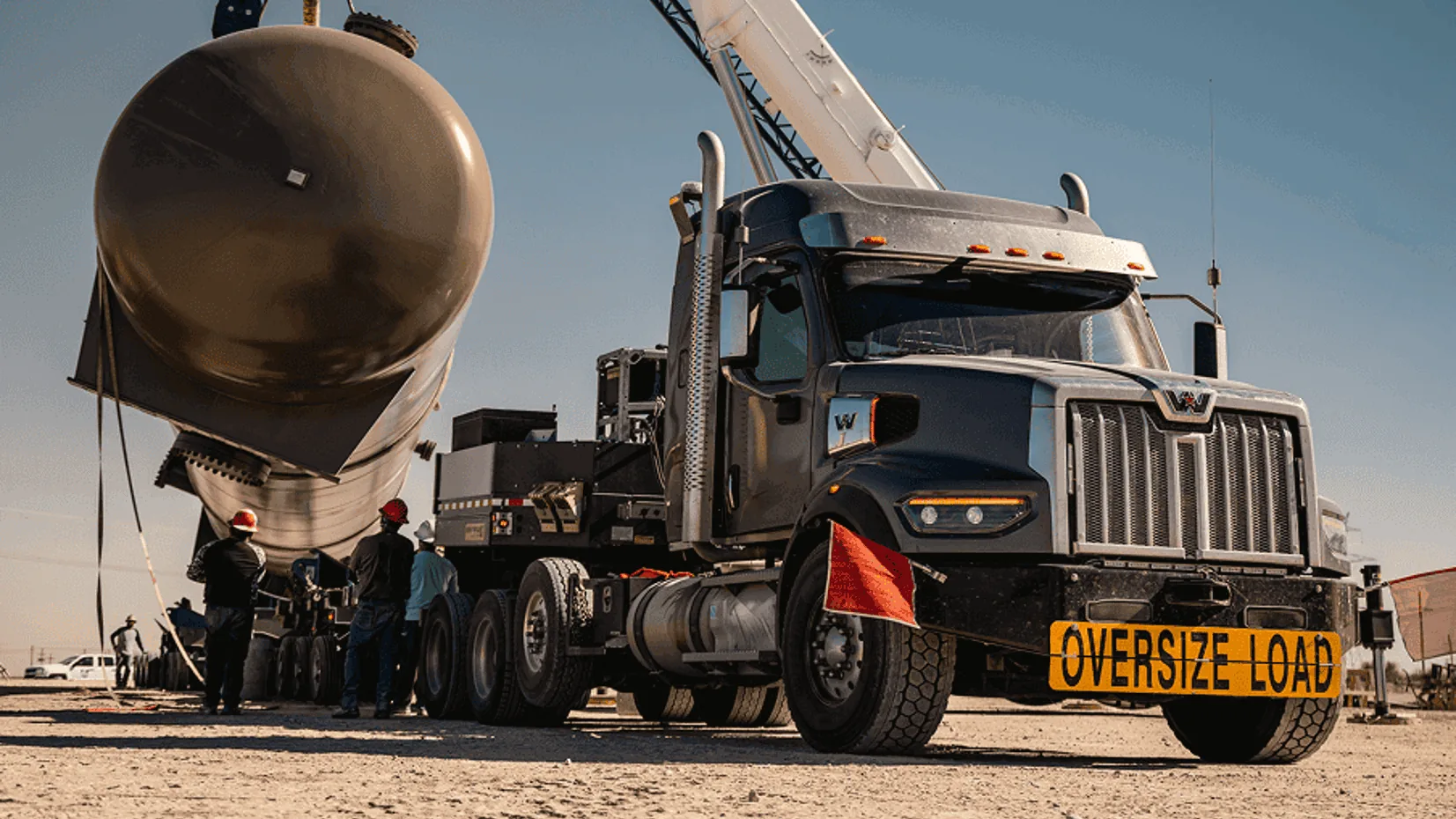

Let’s plan your next 49X
Whether you are replacing a working unit, expanding a fleet or planning a specialized build, tell our Ottawa sales team what the truck needs to do. We can help you review the choices and identify the next steps.