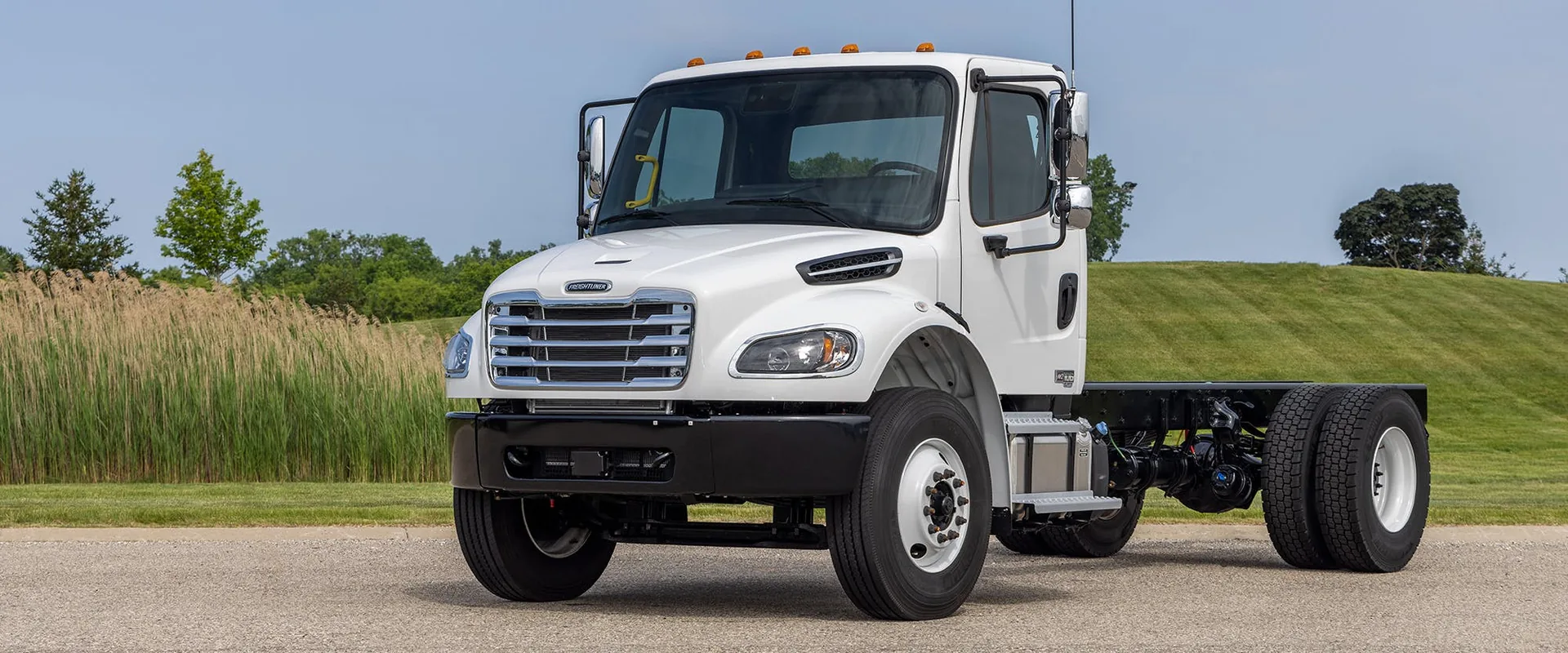
Pickup & delivery
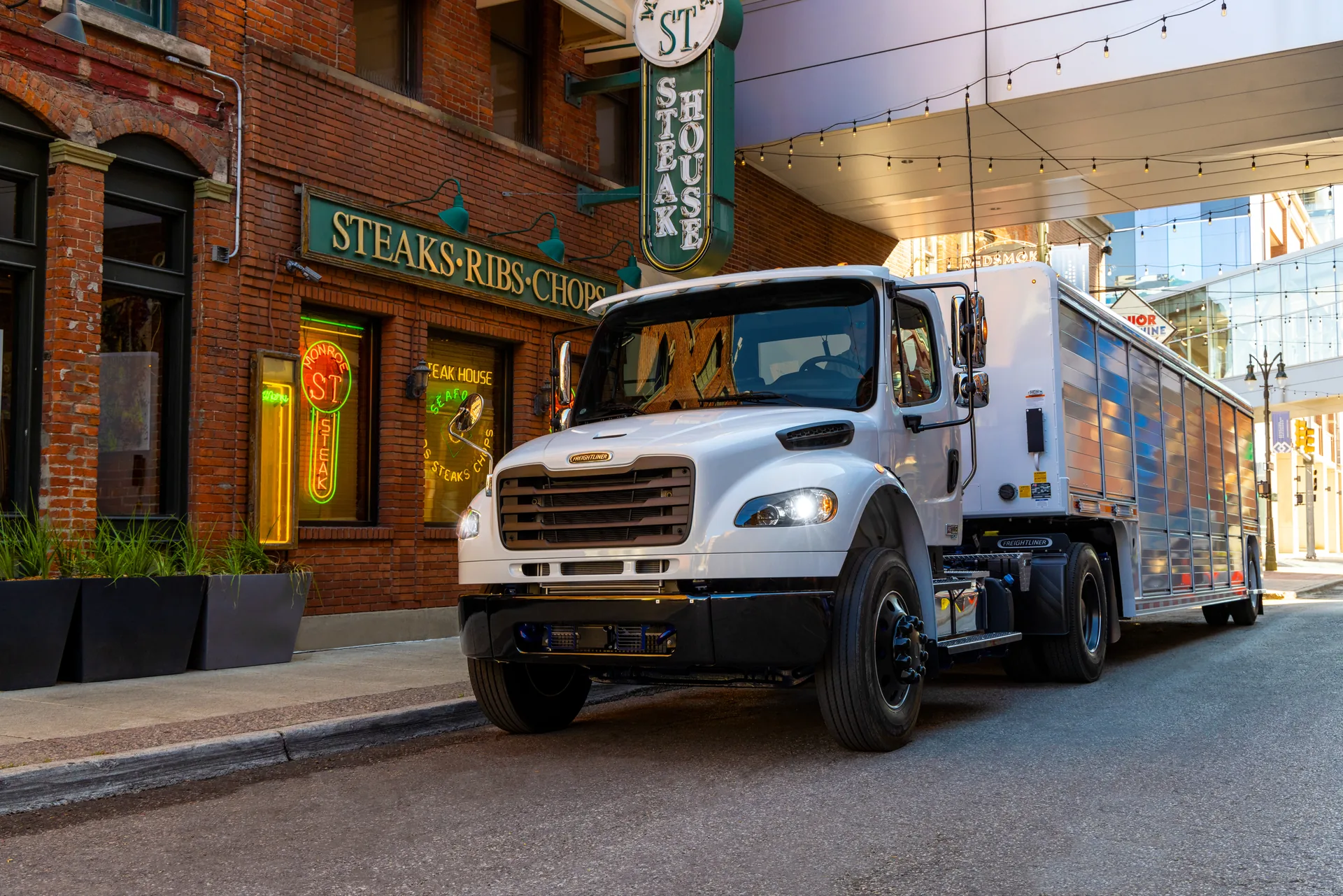
Plan the van body, cargo, liftgate and loading method around the route. Body length, loaded weight and access at customer locations matter as much as the kilometres between stops.
Freightliner / Class 6–8 / M2 106 Plus
One platform. Built for your kind of work.
Model overview
Sales resources
Discuss specifications, body applications, availability, and ordering with our commercial truck team.
Configure your M2 106Six application starting points
A delivery truck, utility vehicle and recovery truck need different specifications. Start with the load, body, people and places that define your normal working day. These are application examples; equipment and completed-vehicle capability depend on the build.
Plan the van body, cargo, liftgate and loading method around the route. Body length, loaded weight and access at customer locations matter as much as the kilometres between stops.
Bring the body, handling equipment and unloading routine together. Packaged goods, beverage and refrigerated work each call for a specification that suits the last delivery as well as the first.
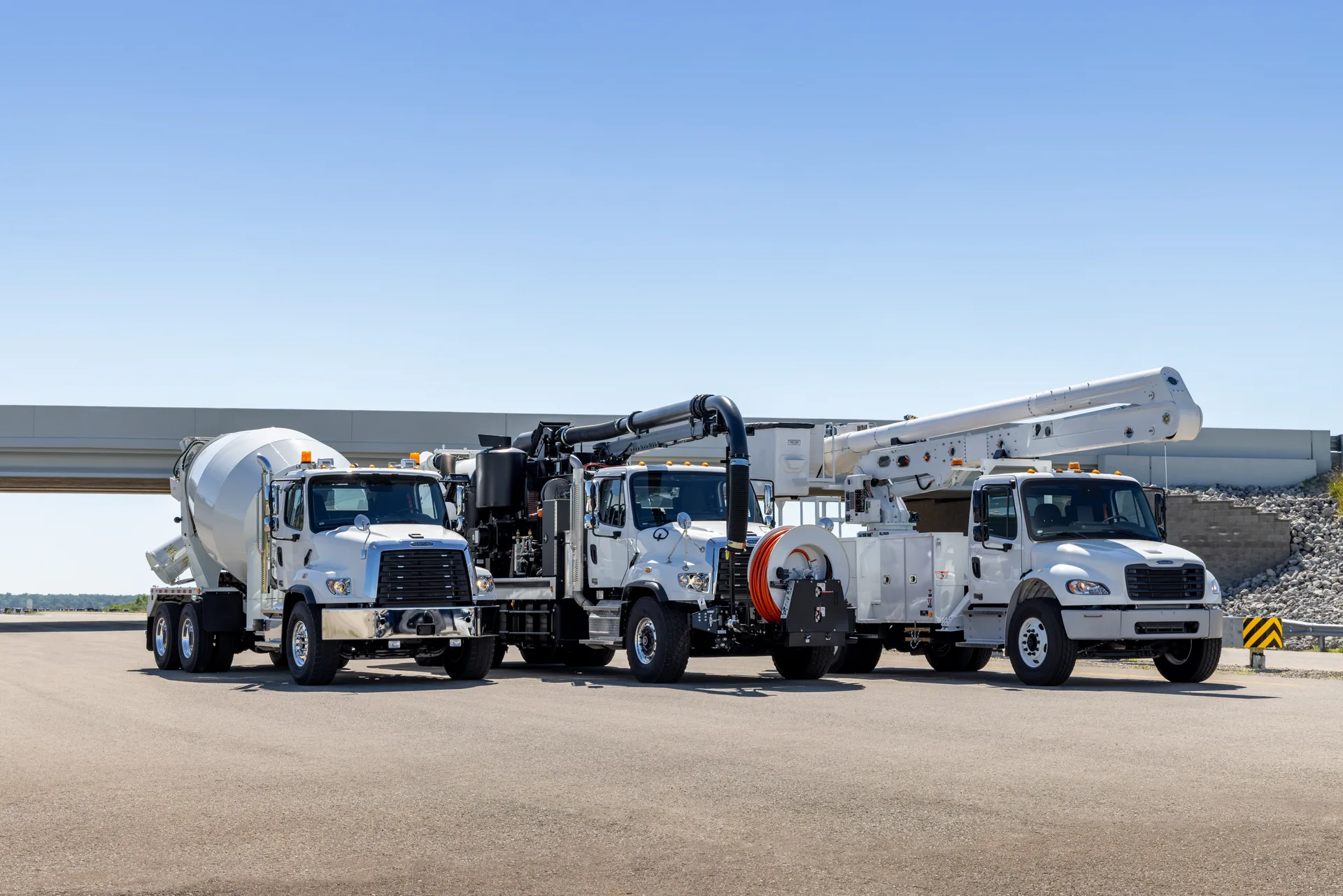
Begin with the materials, crew or specialized equipment the truck will carry. Site access, loaded weight and equipment demands guide the chassis and body choices.
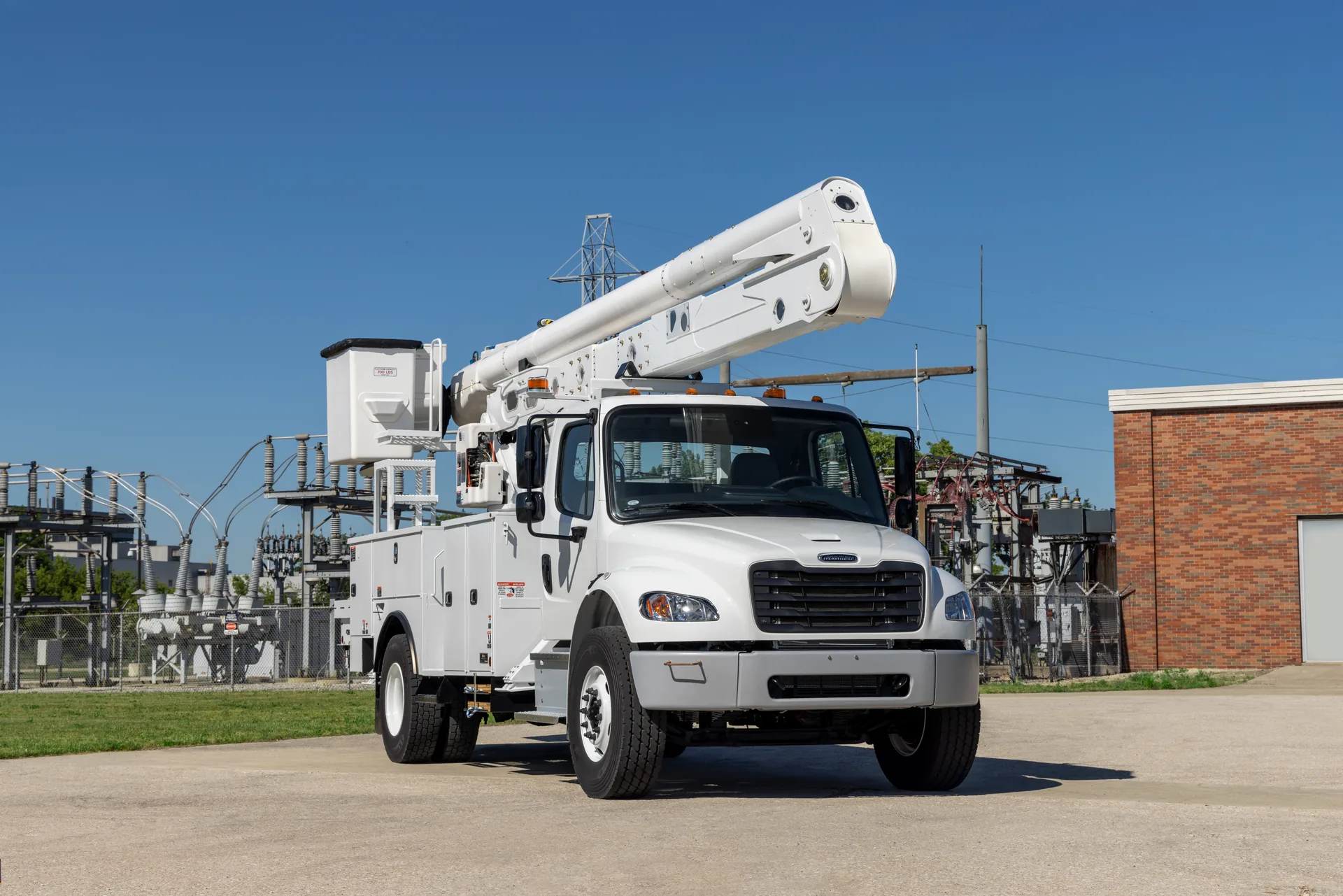
For bucket, digger-derrick and service-body applications, start with the equipment supplier’s requirements. Review crew needs, powered equipment and how the vehicle will work after it reaches the site.
Define the public-service assignment, occupants, equipment and seasonal tasks. Match the completed vehicle to that role instead of carrying unnecessary capability or compromising the body specification.
Use the recovery body and intended vehicles as the starting point. The body builder’s requirements, approved seating and completed-vehicle limits determine suitability; a headline chassis rating is not a towing rating.
QuickFit & equipment integration
QuickFit provides a multiplexed electrical architecture with connection points, programmable switches and configurable functions for truck equipment. The Daimler CHEC Tool supports compatible parameters, body functions and interlocks.
Your body builder must confirm compatibility and complete the appropriate engineering and validation. The utility truck shown is an application example; its equipment is not included with every chassis.
Three cab configurations
BBC means bumper-to-back-of-cab. It is not overall truck length or usable interior space. Confirm approved seating, storage and body clearance for the actual build.
106-inch BBC
The shortest published M2 106 Plus cab configuration suits a discussion about daily routes and local work. Review the occupants, work items and in-cab storage you need before adding cab length.
132-inch BBC
Added cab length creates another option when your working day calls for more in-cab space. Confirm the seating and storage arrangement rather than assuming every extended cab has the same interior.
154-inch BBC
Start with the required approved seating positions when the truck needs to move a team. Then plan wheelbase, body installation and equipment around that requirement. The cab name does not guarantee a particular seating count.
Plus-series driver environment
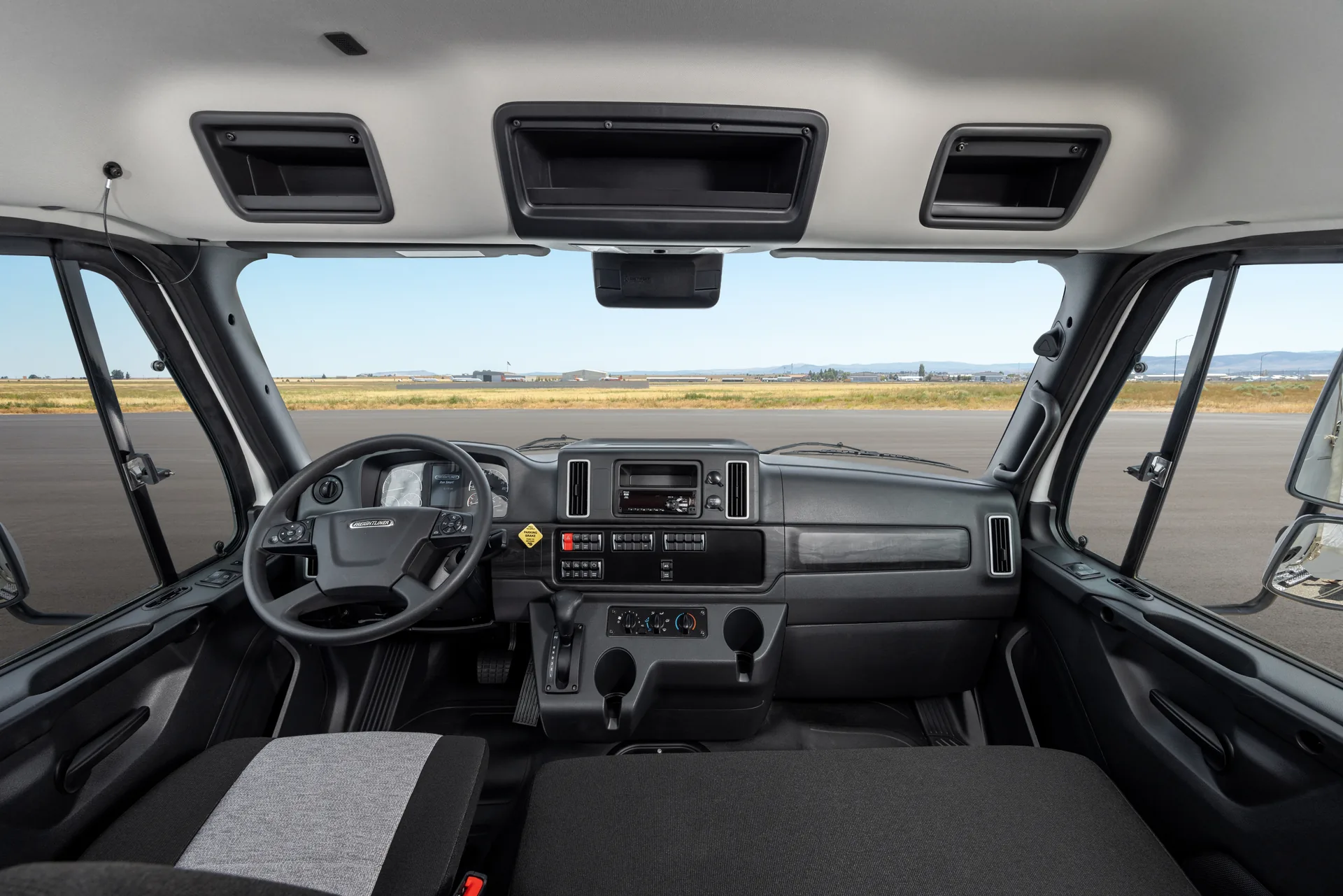
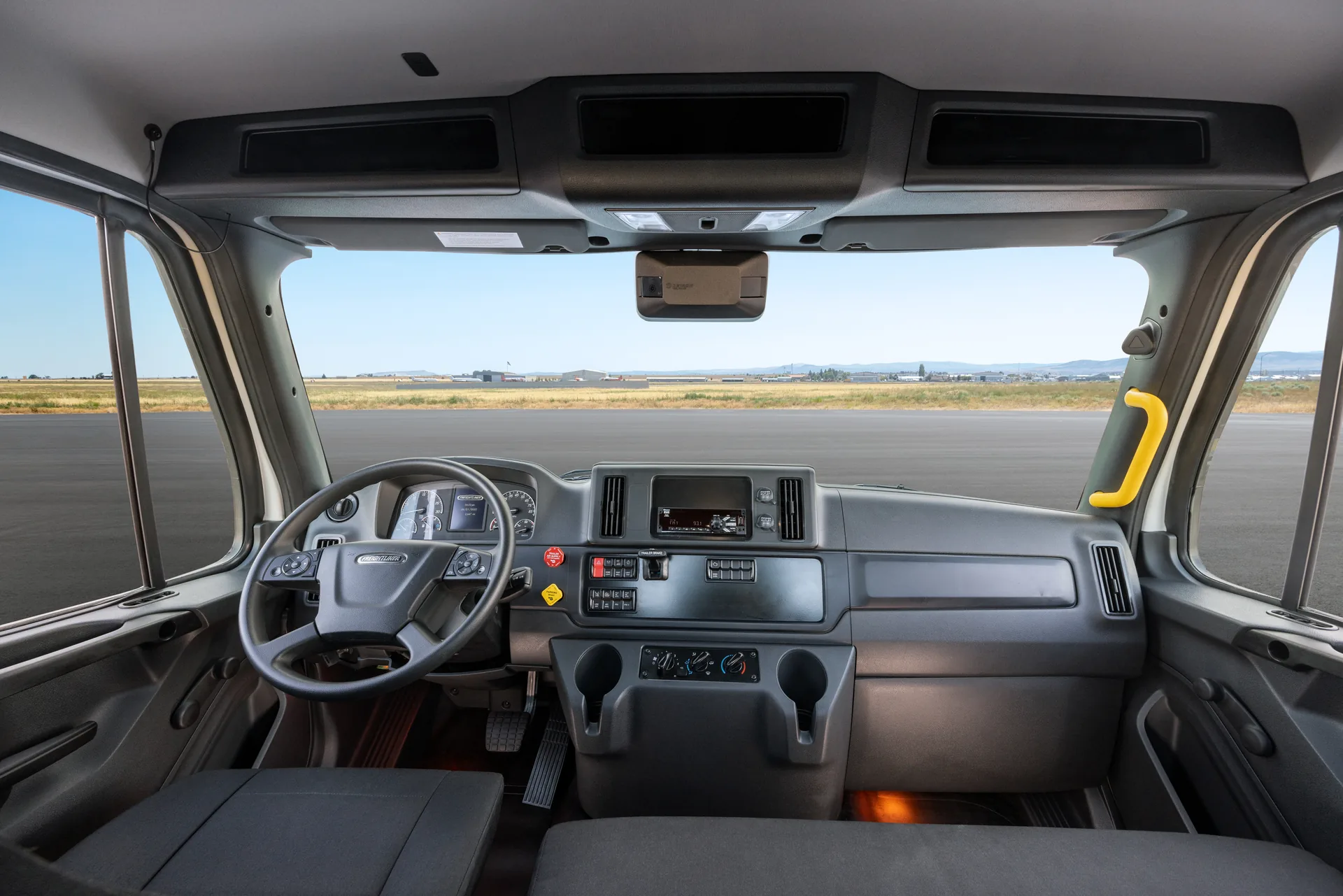
The Plus-series cab brings an updated dashboard and information centre, configurable switches, steering-wheel controls and attention to seating, storage and insulation.
Consider the complete entry path and how body additions affect access. Package contents and seating vary by build, so review the actual truck as well as the photograph.
Match the engine, transmission & duty cycle
Freightliner’s published engine list includes the Detroit DD5, Detroit DD8, Cummins B6.7 diesel and Cummins L9, with operating-market restrictions on L9 configurations. Gasoline offers another option to discuss. Our Sales team can confirm the engine, transmission, chassis and body combinations currently available for your Canadian operation.
The Cummins B6.7 is a 6.7-litre diesel platform for medium-duty truck work, with multiple engine-family ratings for different operating demands. The rating available in an M2 106 Plus depends on the chassis and order specification.
Delivery work calls for a review of loaded routes and repeated starts. On a service truck, idle time and equipment operation may be just as important as road performance. Describe both so the engine and transmission can be selected with the complete vehicle.
Our team can check the rating available for your Canadian chassis, then review axle ratio and equipment demands before you order.
The L9 is designed for demanding medium-duty work. Its replaceable cylinder liners support rebuilding, while an electronically controlled variable-geometry turbocharger forms part of its engine design.
Freightliner’s M2 106 Plus specification lists the L9 with a domicile restriction. Confirm the eligible operating market, chassis rating and order requirements before selecting it. The full L9 engine-family output range is not automatically available in this truck.
For a vehicle expected to work through repeated service cycles, consider supportability alongside loaded performance, equipment use and the intended replacement plan.
The Detroit DD5 is a 5.1-litre, four-cylinder diesel developed for short-haul pickup and delivery. Variable cam phasing helps maintain aftertreatment temperature during low-speed operation, an important part of a route with frequent stops.
Describe loaded travel, idle time and low-speed work so the proposed rating suits the duty cycle. Review the transmission and PTO requirements with the body specification.
Ask Sales to confirm the DD5 rating and transmission currently available for your Canadian build, along with any connected-service equipment and terms.
The DD8 is a 7.7-litre, six-cylinder diesel in Detroit’s medium-duty range. Variable cam phasing supports aftertreatment-temperature management, and compatible Virtual Technician services provide remote diagnostic information.
It offers a larger Detroit engine platform to consider with the truck’s load and equipment needs. Evaluate the rating, transmission and chassis together rather than choosing by displacement alone.
Review current build availability, the selected engine rating, installed connected equipment and included service terms with Sales.
The B6.7 Octane uses regular 87-octane gasoline. It is distinct from the B6.7 diesel and from engines that run on compressed natural gas.
Cummins specifies no diesel exhaust fluid requirement and no active regeneration. Exhaust aftertreatment is still present. Follow the specified maintenance plan for the engine, fuel and emissions systems.
Compare daily distance, loaded work, equipment use, fueling and support with the diesel alternatives. Ask Sales to confirm Canadian availability, the output available in your chosen chassis and the transmission pairing for your application.
Freightliner’s base specifications identify Allison automatic and Eaton manual transmission families. The orderable transmission depends on the engine, chassis and application.
Consider repeated starts under load, low-speed positioning and driver operation as well as the gear count. Where a body uses powered equipment, bring the body builder into the discussion about PTO location, operating speed, control logic and the supported transmission arrangement.
The selected transmission, axle ratio and completed-vehicle weight need to work together. A listed transmission family does not mean that every unit can be paired with every engine or body.
ZF announced its eight-speed PowerLine automatic for the M2 106 Plus with B6.7 Octane, including an engine-driven PTO provision. Its March 2026 announcement identified a North American ordering start.
Allison also announced its nine-speed automatic with B6.7 Octane, with a July 2026 production target. Canadian availability and delivery timing depend on the selected chassis and orderable configuration.
Ask Sales to check current Canadian availability, the transmission and engine rating, and compatibility with the intended body and PTO before proceeding.
Manoeuvrability & visibility
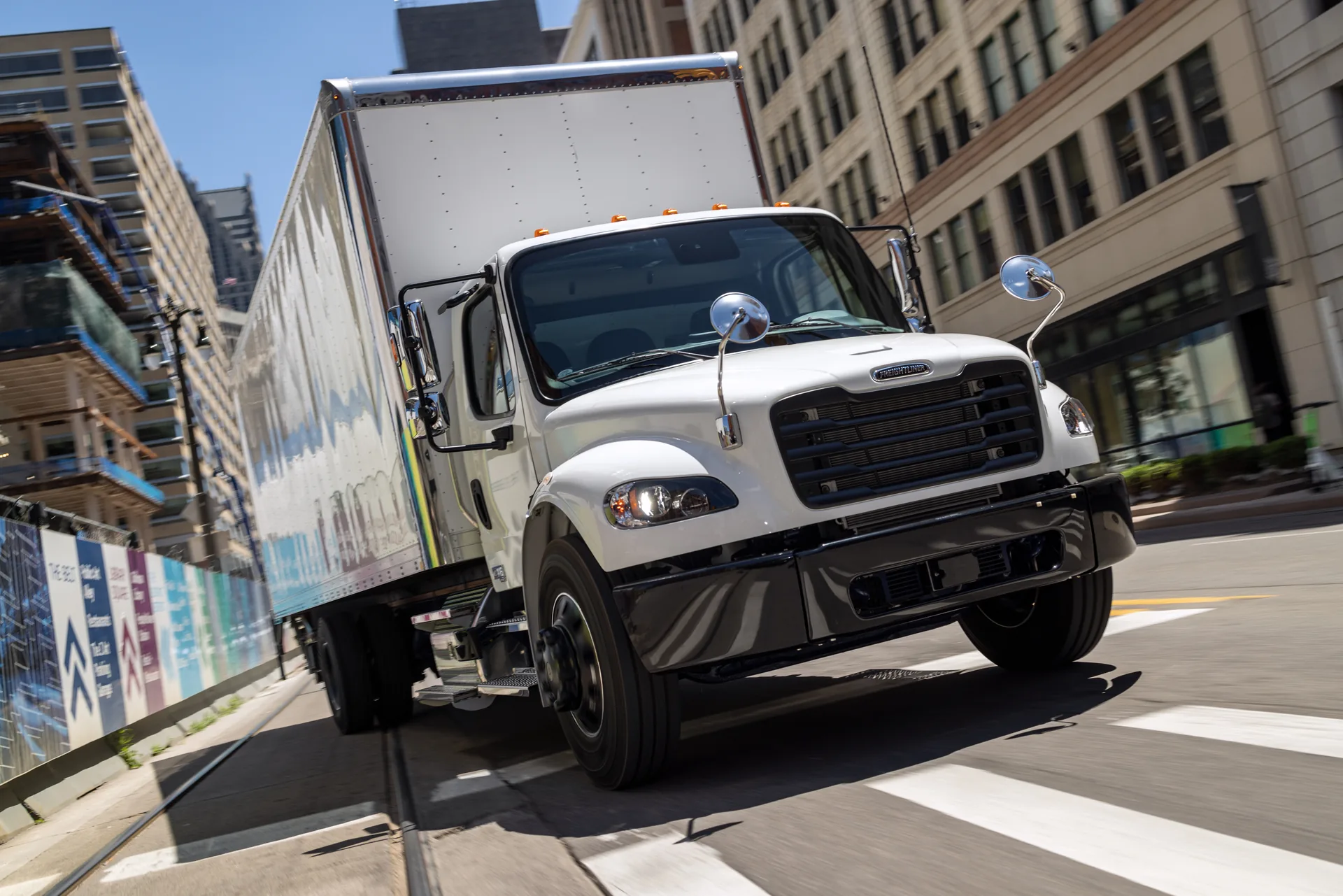
A published wheel cut of up to 55 degrees, sloped hood and 2,500-square-inch windshield support the M2 106 Plus working environment. Optional down-view mirrors and a lower passenger-door window add viewing areas around the cab.
The completed truck determines the space you need. A steering-angle figure alone does not establish a universal turning circle, and body equipment can change visibility.
Confirm the equipment on your build
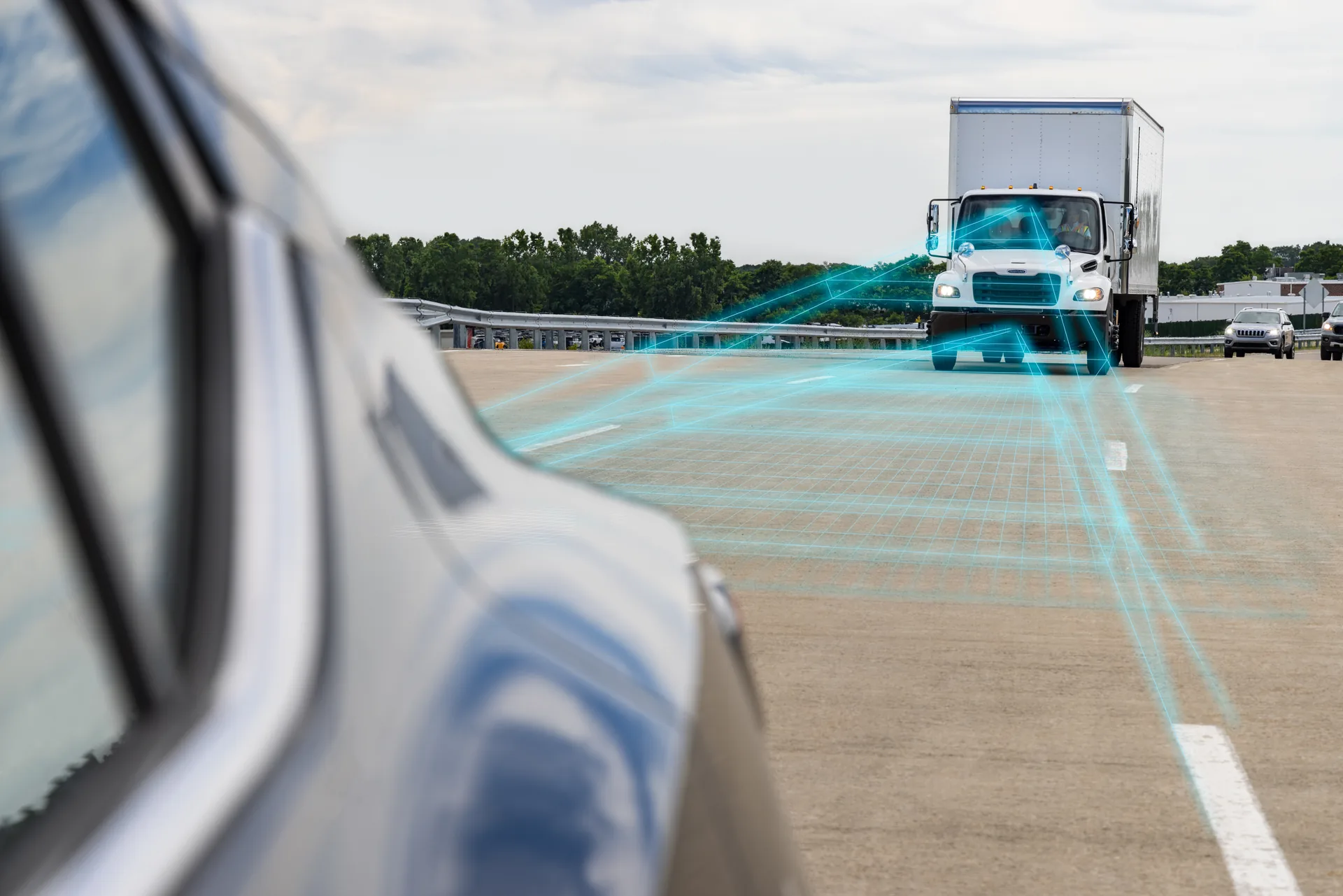
Available assistance has operating limits and does not make the truck autonomous. The driver remains responsible for safe operation. Confirm the installed functions and their instructions on the vehicle you are buying.
The complete working vehicle
Published model figures are a starting point. Review the Canadian build sheet, axle and suspension choices, body requirements and installed equipment. GVWR is the rated total vehicle weight, not the payload available for cargo.
Freightliner publishes Class 6–8, 200–360 horsepower, 520–1,150 lb-ft of torque and up to 66,000 lb GVWR for the M2 106 Plus base model range. These are not the specifications of every engine or completed truck.
GVWR is the rated total vehicle weight. The body, equipment, occupants, operating supplies and other vehicle weight must be accounted for when determining usable payload. Review the actual axle ratings, weight distribution and completed-vehicle requirements with the body builder.
A chassis GVWR also does not establish the towing or recovery capability of a finished truck. Match the completed vehicle to the intended load and application.
Freightliner lists straight-truck and tractor formats, with an available all-wheel-drive option on eligible M2 106 Plus applications. Confirm the proposed engine, chassis and equipment combination; all-wheel drive is not standard on every truck.
A published wheel cut of up to 55 degrees supports manoeuvrability, but the final turning space depends on wheelbase, body length, rear overhang and the complete configuration. Available front-steer axle choices also need to match the application and certified load requirements.
Bring real access constraints into the specification: delivery entrances, equipment yards, loading positions and regular job sites.
BBC means bumper-to-back-of-cab, not overall vehicle length or interior usable space. Begin with the number of approved seating positions and the items that need to travel in the cab.
Then review storage, entry, wheelbase and body integration. Confirm the approved seating and actual interior arrangement on the proposed build so the cab meets your crew and storage requirements.
QuickFit uses a multiplexed electrical architecture with connection points, programmable switches and configurable equipment functions. The Daimler CHEC Tool allows supported electrical parameters, body functions and interlocks to be viewed and modified.
Plan where the driver operates equipment, which controls belong at the body and how the operating sequence should work. Consistent control layouts may be useful across similar fleet vehicles, but the body builder must confirm compatibility and validate the completed installation.
Clear frame rails behind the cab support body planning. Bring body drawings, mounting needs, dimensions, loaded weight, PTO requirements, electrical loads and service-access requirements into the chassis discussion.
The Plus-series update includes a driver-focused dashboard, updated information centre, configurable switches and steering-wheel controls, with attention to seating adjustability, storage and insulation. Freightliner lists Professional as the standard interior, with Elite and Rugged alternatives.
Compare actual package contents, seat choices, finishes and cleaning expectations. A shared truck should be reviewed with the drivers who will use it; a dedicated truck should suit the operator’s recurring tasks and work items.
Low entry height and wide door openings support frequent stops. Check the complete entry path, usual work clothing, door-opening space and any equipment that may obstruct access after the body is fitted.
The sloped hood and 2,500-square-inch windshield contribute to forward visibility. Optional down-view mirrors and a lower passenger-door window add viewing areas around the cab. Body additions, toolboxes and equipment still need to be considered for their effect on sightlines.
Freightliner announced standard LED headlights beginning with 2026 M2 Plus builds. Automatic headlamp deicing is optional. Check the actual equipment when reviewing an older truck, an inventory unit or a proposed order.
Lighting and visibility belong in the original application discussion, especially where the operation includes early starts, late finishes or repeated work around customer locations.
The M2 106 Plus is offered with Detroit Assurance with Active Brake Assist 5. In specified conditions, ABA 5 can warn and apply partial or full braking in situations involving vehicles or moving pedestrians. Lane Departure Warning and available passenger-side Side Guard Assist add other forms of awareness.
Freightliner’s model-specific information identifies Adaptive Cruise Control for Detroit-powered configurations, with operation down to 10 mph, approximately 16 km/h. Available functions depend on the engine and vehicle configuration, so review the M2 106 Plus equipment listed on your build sheet.
Confirm the exact functions, operating limits and driver training for the installed vehicle. Assistance does not replace observation, judgment or correct operation and does not make the truck autonomous.
The available factory Backup Alert System combines a seven-inch touchscreen, rear camera and proximity sensor with audible in-cab alerts. Camera arrangements include preparation for positioning during the upfit so the view can suit the completed body.
This is a passive camera-and-warning system, not automatic reverse braking. Plan the camera location before the body is installed and review the completed view with the driver.
Available Bendix IntelliPark electronic parking-brake control includes an anti-roll-away function for specified operating conditions. Review the equipped vehicle’s manual and handover instructions. It does not replace correct parking procedures or checking that the truck is secured.
On appropriately equipped Detroit-powered trucks, Virtual Technician provides information about detected engine and aftertreatment faults, including severity and service guidance. The Detroit Connect Portal supports fault review and trends; compatible Safety Event Viewer services can provide selected safety-event information.
Decide who will review the information and how it fits maintenance and driver support. Follow vehicle warnings and operating instructions; remote information is not a substitute for inspection when it is needed.
Confirm hardware and engine compatibility, which services are included, the length of the included term and any ongoing subscription costs. For a Cummins-powered build, review the compatible diagnostic services separately.
The M2 106 Plus uses a steel-reinforced aluminium cab with e-coat treatment for corrosion resistance. TufWrap chassis wiring protection and protected electrical-component locations form part of its durability approach. A wide-tilting hood and accessible transmission support service access.
Maintain that access as equipment is added. Toolboxes, auxiliary systems and body components need space for both their working function and their maintenance. Discuss routine inspections, body-equipment service, records and specialist support before finalizing the build.
Francis Canada’s Ottawa Parts and Service teams provide a point of contact for identification, maintenance, diagnostics, repairs and eligible warranty concerns. Keep the VIN, body identification and equipment-manufacturer details together, and confirm the scope of support for the required work.
Bring what you know
An existing truck specification, a body supplier’s drawing or a clear description of the job is enough to start. You do not need a completed order sheet before speaking with Sales.
Share the application, operating area, daily distance, typical stops and access constraints. Explain what works on your current truck and what you would change.
Provide body dimensions, loaded weight, equipment and PTO needs. Include approved seating, driver preferences and the body supplier’s technical information.
Discuss quantity, replacement plans and desired timing. Confirm the Canadian-market powertrain, chassis, body compatibility and installed equipment before moving ahead.
Current inventory & ordering
Check available M2 106 Plus trucks or speak with Sales about your preferred configuration. Compare the actual body, equipment and build specification with your application before choosing a unit.
Inventory is being updated.
Ask our sales team about available and incoming units.
Francis Canada Truck Centre
Plan the vehicle and its support together. Keep chassis, body and equipment information available so our team can help identify the right next step.
Bring your application, load, crew and body requirements. Our commercial truck team can help compare the complete specification, availability and ordering choices.
Buying & operating FAQs
Use these answers to prepare for a model-specific discussion with Sales, your body builder and the people who will operate the truck.
Freightliner includes it in pickup and delivery, food and beverage, construction, utility, municipal, service, and towing and recovery applications. Suitability depends on the completed chassis, body, equipment and load requirements, not just the model name.
The Plus series introduced changes to the M2 interior, electrical architecture and available safety and connectivity equipment. When comparing a Plus model with an earlier M2, review the actual dashboard, electrical system and installed equipment because the features can differ.
Start with approved seating positions and the space your people and work items require, then review the body arrangement. Published BBC dimensions are 106 inches for day cab, 132 for extended cab and 154 for crew cab. BBC is not overall length or usable interior space, and actual seating and storage vary.
Yes, bring the body specification and supplier information to the initial discussion. QuickFit and the CHEC Tool support compatible electrical functions, switches and interlocks, but the body builder must confirm the mounting, power, control logic and complete-vehicle compatibility. A supplier drawing is a useful starting point.
No. GVWR is the rated total vehicle weight, not the cargo allowance. The completed truck’s body, equipment, occupants and operating weight must be considered to determine usable payload. Confirm the actual chassis, axle and completed-vehicle limits for your load.
Freightliner lists an all-wheel-drive option for eligible M2 106 Plus applications. It is not standard on every truck. Ask Sales to confirm compatibility with the proposed engine, chassis, body and Canadian-market build.
The Cummins B6.7 Octane is a gasoline option, distinct from the B6.7 diesel and from CNG engines. Cummins specifies regular 87-octane gasoline, no DEF and no active regeneration, with exhaust aftertreatment still present. Confirm current Canadian ordering, the applicable rating and transmission pairing with Sales.
Freightliner announced standard LED headlights beginning with 2026 M2 Plus builds. Automatic headlamp deicing is optional. Review the build sheet or inventory truck to confirm its equipment, particularly when comparing older vehicles.
No. Confirm the fitted equipment and operating limits for the individual vehicle. The available Backup Alert System is a passive camera-and-warning system; it does not automatically brake the truck in reverse. Driver assistance and parking aids do not replace observation, correct procedures or driver responsibility.
Share the intended application, operating area, body type and dimensions, approximate loaded weight, powered-equipment needs, approved seating, quantity and desired timing. An existing truck specification or body supplier’s proposal is helpful, but you can start with a clear description of a normal working day.
Walkaround
7 photos
Start with your application
Tell us what the truck will carry, who it needs to move and what it must do on site. Our Sales Department can help turn those requirements into a complete vehicle specification.