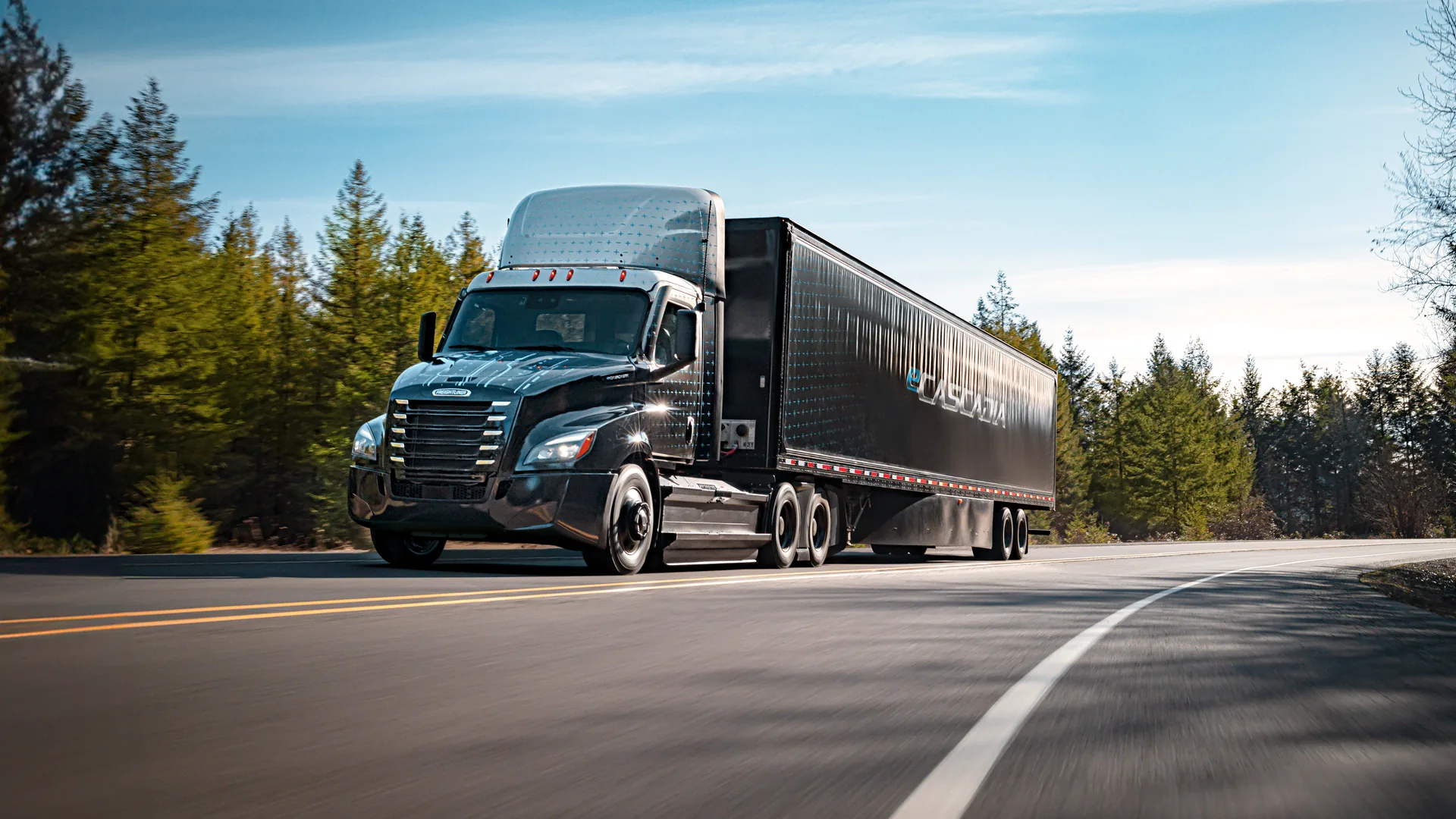
 Model one
Freightliner Trucks
eCascadia
Electric power. Real freight. A new working day.
No available units currently listed
Change this modelSide-by-side model guide
Compare Freightliner and Western Star truck models side by side, review key specifications, and find the right platform for your operation.
The contenders
Published ranges describe the model family; final ratings and equipment depend on the selected configuration.
Model one
Freightliner Trucks
Electric power. Real freight. A new working day.
No available units currently listed
Change this model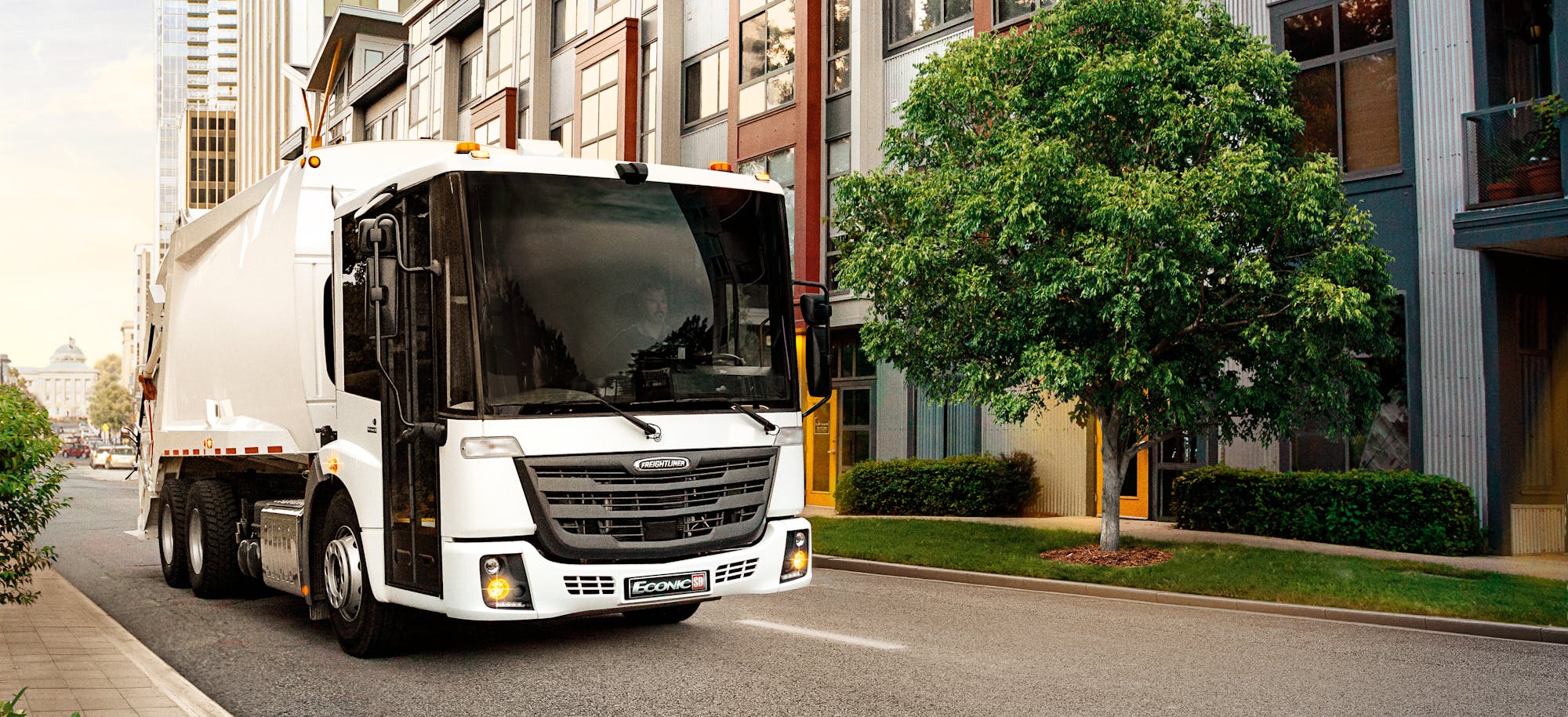 Model two
Freightliner Trucks
Built around the people behind every pickup.
No available units currently listed
Change this modelSpecifications
“Not listed” means a value has not been published for that model. Contact our sales team for configuration-specific ratings.
Scroll horizontally to view both models on smaller screens.
| Specification | Freightliner Trucks eCascadia | Freightliner Trucks EconicSD |
|---|---|---|
| Core model information | ||
| Application | Class 8 Battery-Electric Tractor | Class 8 Low-Entry Refuse Truck |
| Horsepower | 320 / 395 / 425 / 470 HP | 350 HP |
| Torque | Not listed | 1,050 lb-ft |
| GVWR | Not listed | Up to 66,000 lb; by configuration |
| Available inventory | 0 available units | 0 available units |
| Model highlights | ||
| Vehicle class | Class 8 | Not listed |
| Power source | Battery electric | Not listed |
| Day cab | 116-inch BBC | Not listed |
| Usable battery capacity | 291 or 438 kWh; by configuration | Not listed |
| Published model range | ||
| Vehicle class | Not listed | Class 8 low-entry refuse |
| Powertrain | ||
| Engine | Detroit battery-electric ePowertrain; no combustion engine | Detroit DD8 7.7-litre diesel; 350 HP and 1,050 lb-ft for EconicSD |
| Transmission | Transmission components integrated into the electric eAxle drive system | Allison 3000 RDS six-speed automatic with PTO capability; approved equipment pairing required |
| Fuel & emissions | ||
| Fuel | Stored electrical energy; zero tractor tailpipe exhaust emissions | Diesel |
| Cab & chassis | ||
| Vehicle formats | Day-cab tractor | Low-entry refuse cabover |
| Cab roof choices | Not listed | High roof or low roof; selected body clearances and approved seating to be confirmed |
| Maximum published wheel cut | Not listed | Up to 46 degrees; completed chassis/body dimensions determine manoeuvring space |
| Front-axle layouts | Not listed | Set-back front axle |
| Front-axle ratings | Not listed | 18,000 lb standard; 20,000 lb option listed for low-roof cab; approved vehicle rating separate |
| Rear-axle arrangements | Not listed | 46,000-lb tandem with hub reduction; completed-vehicle loading to be confirmed |
| Suspension and brakes | Not listed | Front/rear air suspension and all-wheel disc brakes; lifting/lowering functions optional |
| Body integration | ||
| Collection configurations | Not listed | Automated side loader, rear loader or front loader; body compatibility and equipment by build |
| Driver environment | ||
| Driving position | Not listed | Right-hand drive listed as an option; confirm Canadian cab/door arrangement, not assumed dual controls |
| Driver interface | Two-screen digital dashboard, multifunction steering wheel and customizable LED-backlit switches | Not listed |
| Electric configurations | ||
| Drive configuration | Single drive 4×2 or tandem drive 6×4 | Not listed |
| Typical range by configuration | 4×2 291 kWh: ~249 km; 4×2 438 kWh: ~370 km; 6×4 438 kWh: ~354 km. Typical, diminishing-load/regen applications; conditions vary | Not listed |
| Maximum GCW by configuration | 4×2: 65,000 lb; 6×4: 82,000 lb. Loaded tractor/trailer, not payload or GVWR; approved operation to be confirmed | Not listed |
| Charging | ||
| Charging connection | CCS1 DC; compatible equipment and site access required | Not listed |
| Maximum charging power | Up to 180 kW single-port or 270 kW combined dual-port; configuration and conditions apply | Not listed |
The next step
Our team can help translate these model ranges into a truck specification built around payload, route, body equipment, driver needs, and lifecycle cost.